Product Description
About This Tabas Rug
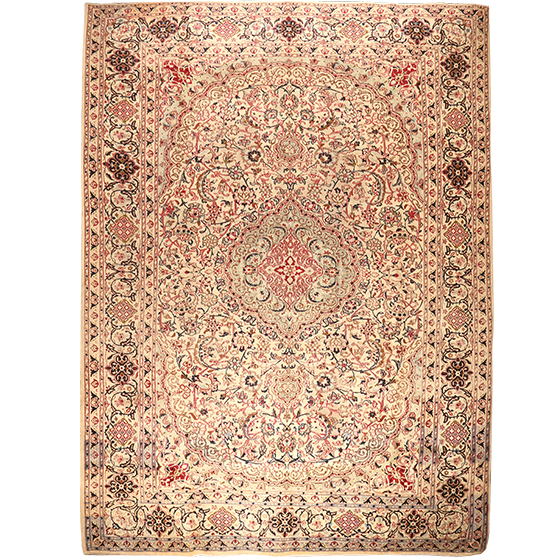
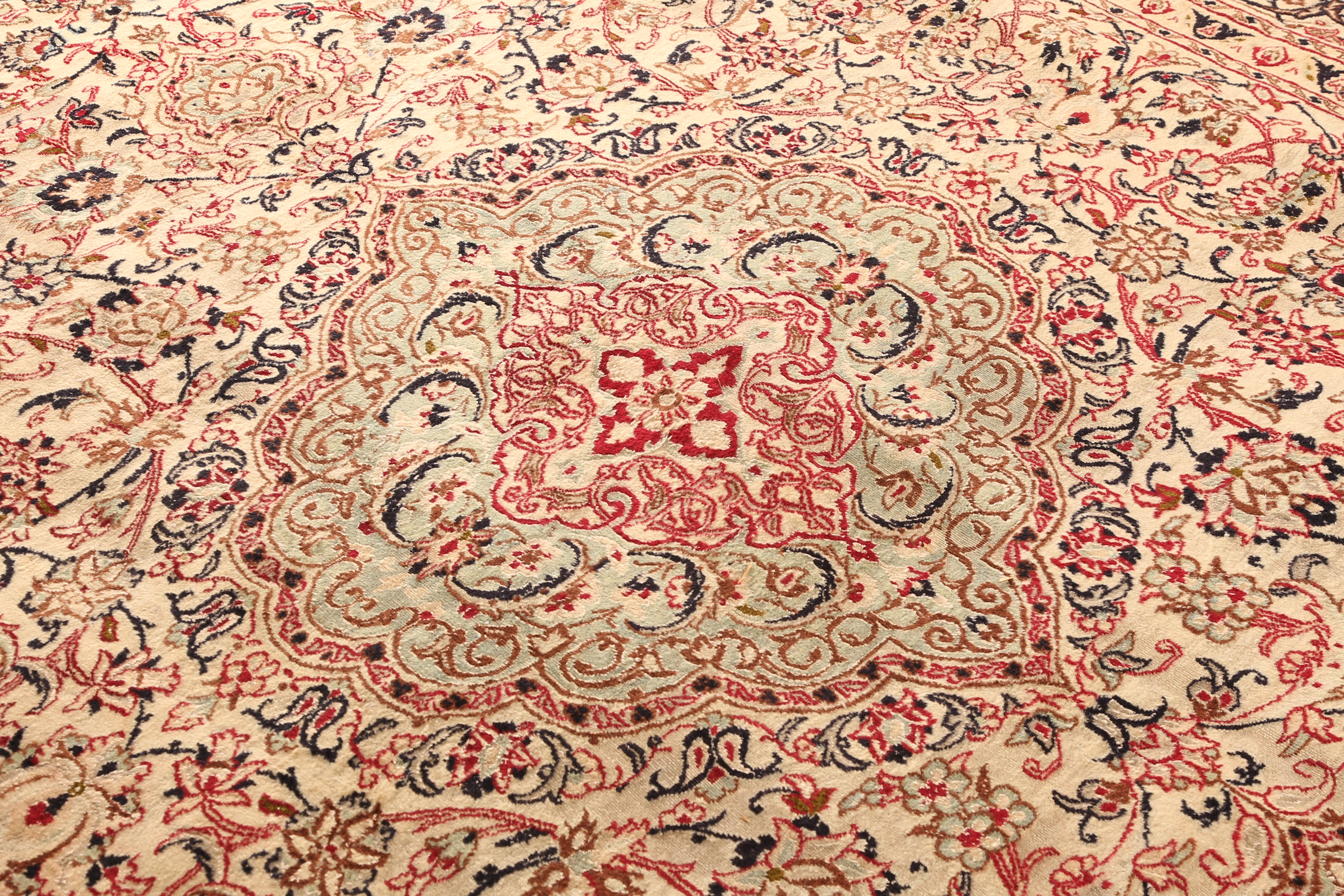
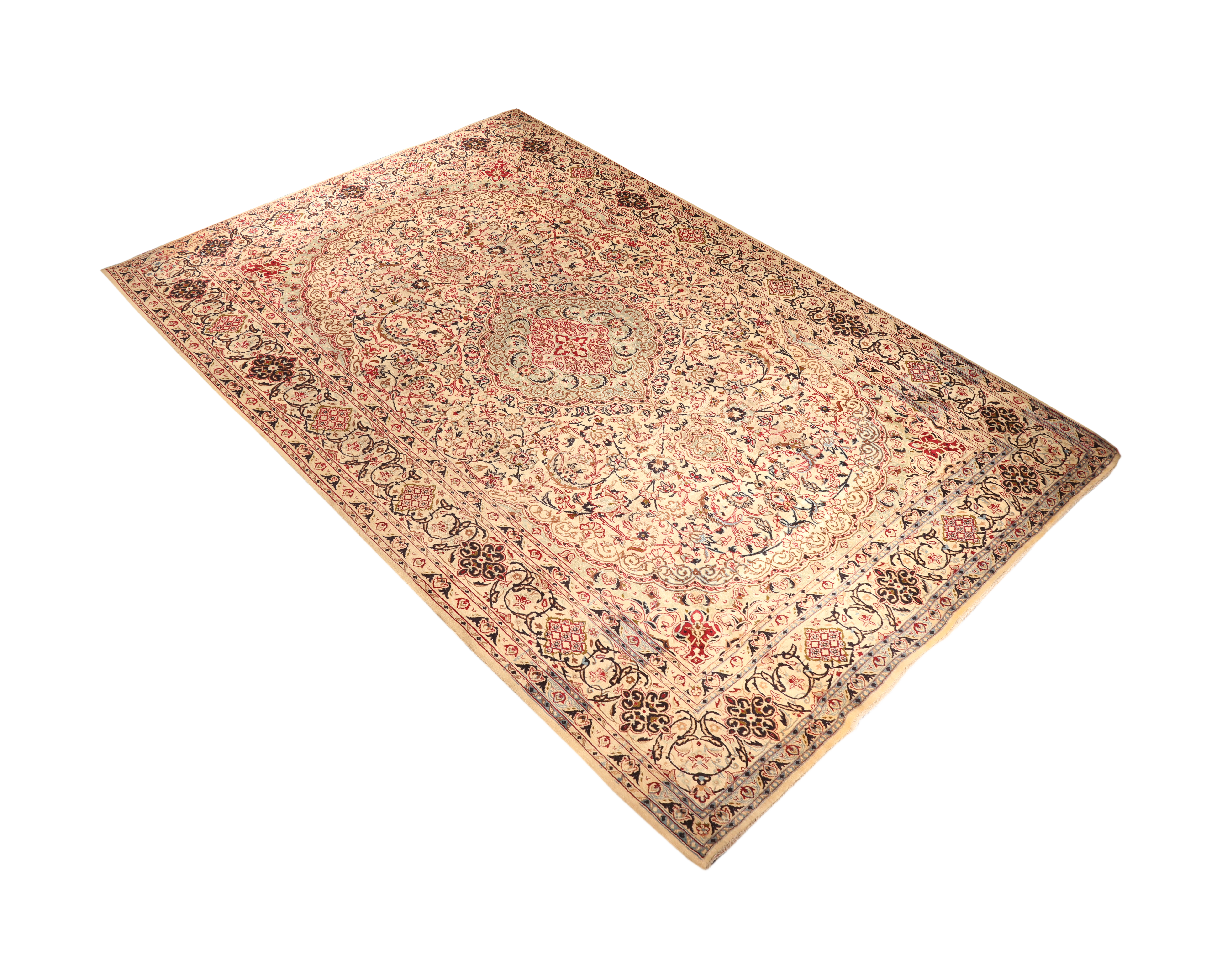
This magnificent semi antique Tabas Persian rug at 12'12" x 9'6" showcases the sophisticated artistry of Khorasan province weavers from four to six decades past. The harmonious palette of cream and ivory provides an elegant foundation, beautifully contrasted by rich madder red medallion work and complemented by deep navy blue, warm brown, lustrous gold, rust red, and forest green accents. The central toranj (medallion) commands attention with its intricate Shah Abbasi palmettes and flowing eslimi arabesque motifs, creating a masterpiece that bridges traditional Persian craftsmanship with contemporary luxury.
The ancient city of Tabas, nestled in the eastern reaches of Persia's Khorasan region, has been a crossroads of culture and commerce for over a millennium. This desert oasis town, surrounded by date palm groves and fed by ancient qanats, became renowned for producing rugs that reflected both the harsh beauty of the surrounding landscape and the refined tastes of Persian nobility. Tabas weavers developed their distinctive style during the Safavid era, incorporating elements from both Isfahan court workshops and nomadic tribal traditions, resulting in rugs that possess both architectural precision and organic vitality.
The medallion design represents the cosmic order in Persian symbolism, with the central toranj serving as the celestial dome surrounded by corner spandrels that echo the heavens. Shah Abbasi palmettes, named after the great Safavid shah, symbolize the tree of life and eternal growth, while the eslimi patterns create an endless flow of energy throughout the composition. This semi antique example demonstrates the mature evolution of these motifs, where each element has been refined through generations of master weavers who understood both the technical demands of the loom and the spiritual significance of their art.
The sophisticated color harmony speaks to the advanced dyeing techniques of mid-20th century Tabas workshops, where natural materials created these enduring hues. Cream and ivory grounds were achieved using the finest undyed wool, while the madder red came from the roots of rubia tinctorum plants, and the navy blue from precious indigo. Gold tones emerged from pomegranate rind and turmeric, while forest green resulted from a complex combination of indigo and local yellow dyes. This one-of-a-kind hand-knotted masterpiece elevates any living space with its authentic Persian heritage and timeless elegance.
At 12 by 9 feet, this substantial rug provides perfect coverage for large living rooms, formal dining areas, or master bedrooms, creating an anchor for furniture arrangements while leaving appropriate borders around the room's perimeter. Los Angeles Home of Rugs recognizes this exceptional piece as a testament to Persian weaving excellence, where asymmetrical knots and natural wool fibers combine with traditional cotton foundations to create a rug built for generations of enjoyment.
Placement Suggestions
Full Specifications
| Original Name | Tabas Rug |
| Alternative Name | Tabas Carpet |
| Origin | Khorasan, Persia |
| Category | City |
| Common Designs | Medallion (Toranj), Shah Abbasi, Eslimi (Arabesque) |
| Dyeing Method | Natural, Synthetic |
| Pile Material | Wool, Silk |
| Foundation Material | Cotton |
| Knot Type | Asymmetrical (Persian) |
| Trust Signals | 100% Authentic Hand-Knotted — Certificate of Authenticity included with every purchase |
| Availability | Only One Available — This exact rug is unique. Once sold it cannot be reordered or replicated |
Features
Frequently Asked Questions
Is this Tabas rug genuinely hand-knotted?
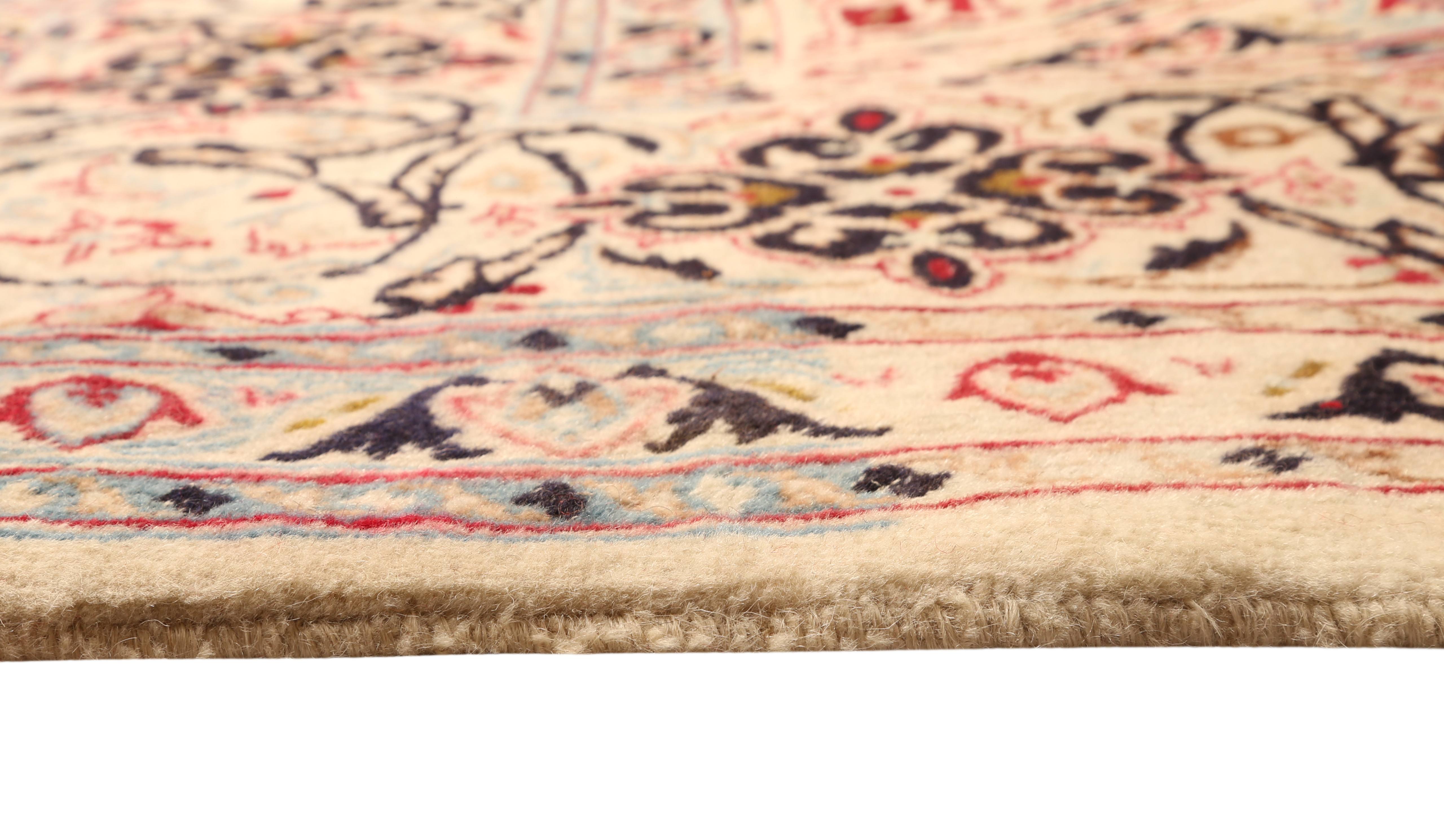
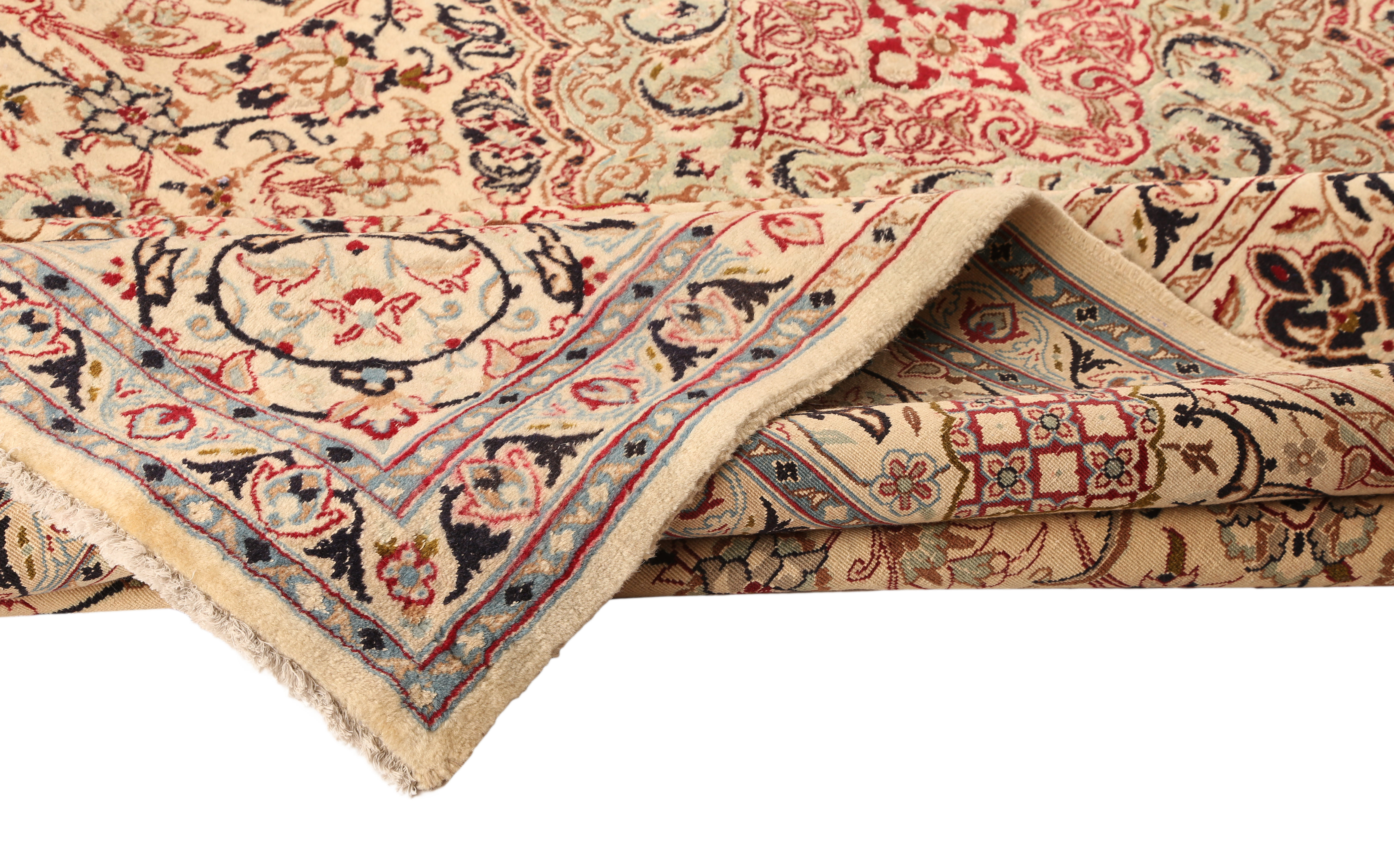
Yes. This rug is 100% hand-knotted. Every single knot was tied individually by hand by a skilled weaver in Khorasan, Persia. It is not machine-made, hand-tufted, or hand-hooked. The knot structure is clearly visible on the reverse side of the rug, confirming its authentic hand-knotted construction.
What does the age classification mean for this Tabas rug?
This Tabas rug is classified as antique, meaning it is 100 years old or more. By international convention and U.S. Customs standards, a rug must be at least 100 years old to qualify as antique. Antique Persian rugs are the most prized category among collectors, valued for their historical significance, natural dye patina, aged wool softness, rarity, and the way their colors have mellowed and deepened beautifully over a century or more of careful use.
Where does the Tabas rug originate?
This Tabas rug originates from Khorasan, Persia. The Khorasan region has a long and distinguished history of rug weaving, with local artisans developing their own distinctive design vocabulary, color traditions, and technical approaches that set their rugs apart from other Persian weaving centers. The city rug category from this region is particularly known for its medallion (toranj), shah abbasi, eslimi (arabesque) design traditions.
What knot type was used to weave this Tabas rug?
This Tabas rug was woven using both the asymmetrical Persian (Senneh) knot and the symmetrical Turkish (Ghiordes) knot. The asymmetrical Persian knot, which wraps around one warp thread, allows for finer curvilinear design detail. The symmetrical Turkish knot, which wraps around two warp threads, produces a more robust pile. The use of both techniques reflects the weaver's mastery and adaptability within the regional weaving tradition.
Is this rug one of a kind?
Yes. This is a one-of-a-kind piece. As an authentic hand-knotted Persian rug, no two examples are identical. Only one of this exact rug is available in our collection. Once sold, this specific piece cannot be reordered or replicated. Every hand-knotted Persian rug is a unique artifact of its weaver's skill, materials, and creative expression.
Does this rug come with a Certificate of Authenticity?
Yes. Every rug purchased from Los Angeles Home of Rugs includes a Certificate of Authenticity documenting the rug's origin, age, materials, construction method, and appraised value. This certificate is accepted by major U.S. insurance providers and supports resale, estate, and auction documentation.
How do I care for this wool, silk rug?
Vacuum gently without a beater bar once a week in the direction of the pile. Rotate the rug every 6 to 12 months to ensure even wear. For spills, blot immediately with a clean white cloth without rubbing. For deep cleaning, use a professional Persian rug cleaning specialist who uses hand-washing methods appropriate for natural wool, silk fibers and aged dyes. Avoid steam cleaning or harsh chemical treatments.
What is the shipping policy for this rug?
Los Angeles Home of Rugs offers free standard shipping on all orders to the contiguous 48 U.S. states and Washington D.C. For orders to Alaska, Hawaii, P.O. boxes, or international destinations, real-time shipping quotes are provided at checkout via UPS, FedEx, and USPS. All rugs are carefully rolled and packaged to ensure safe delivery.
What is your return policy?
We offer a 30-day hassle-free return policy on all rugs. If you are not completely satisfied with your purchase, contact us within 30 days of delivery to arrange a return. Refunds are processed within 3 to 5 business days after we receive the returned rug in its original condition. Return shipping costs are the responsibility of the buyer unless the rug was received damaged or incorrectly described.
At Los Angeles Home of Rugs, we only stock hand-knotted rugs. We do not carry machine-made, hand-tufted, hand-hooked, or hand-woven rugs. Every rug in our collection is certified authentic and comes with a Certificate of Authenticity. Read More