


Is Investing in Oriental Hand-knotted Rugs Profitable?
Los Angeles Home of Rugs on May 8th 2024
The allure of Oriental rugs as lucrative investments has echoed through generations. Prestigious auction houses around the world routinely tell stories of rugs entering with modest estimates only to fetch extraordinary sums at the hammer - a Turkmen piece languishing for years in a corner antique shop eventually selling for over $23,000 at a Boston auction, a 17th-century Persian carpet changing hands for tens of millions of dollars at Sotheby's New York. These stories tempt retirees, collectors, and investors alike to consider authentic hand-knotted rugs as a serious component of a long-term investment strategy. But does the investment promise hold true? And if so, how should a thoughtful buyer approach it?
This guide provides an honest, comprehensive, and practically useful framework for thinking about Persian and Oriental rug investment - covering the realistic expectations a buyer should bring to the market, the factors that most reliably drive long-term value appreciation, the risks that every investor must understand, and the specific steps that distinguish successful rug investors from those who make costly mistakes.
1 Setting Realistic Expectations - What Rug Investment Actually Looks Like
Buying a rug is not akin to winning the lottery - but it does not spell financial doom either. The stories of extraordinary auction results are real, but they represent the exceptional rather than the typical outcome. What the finest antique and semi-antique Persian rugs have demonstrated, over the long arc of the international decorative arts market, is something more modest but more reliable than overnight fortunes: a consistent pattern of gradual appreciation that, for the best pieces, has significantly outpaced inflation across the 20th century and into the 21st.
A reasonable, realistic expectation for a quality hand-knotted Persian rug - particularly an antique or semi-antique piece with natural dyes, documented provenance, and strong aesthetic qualities - is meaningful appreciation over a holding period of ten years or more. This is not a short-term trading opportunity; it is a long-term store of value that combines investment potential with the immediate daily pleasure of living with an extraordinarily beautiful object. The emotional value of owning a great Persian rug is itself a form of return that most financial instruments cannot offer.
The most important principle of rug investment is also the simplest: buy rugs that genuinely captivate you as works of art. Whether they appreciate significantly, modestly, or not at all over your holding period, their emotional value will endure. A rug that does not move you aesthetically will not move others either - and emotional indifference to an object is one of the most reliable predictors of poor investment outcomes in the decorative arts market.
2 The Factors That Drive Long-Term Value Appreciation
Not all rugs appreciate equally - and understanding the specific factors that most reliably support long-term value appreciation is the essential foundation of informed rug investment. The following characteristics, individually significant and collectively decisive, are what distinguish investment-grade Persian rugs from merely decorative purchases.
• Age and collectible status - Persian rugs that are at least 30 years old are considered collectible items in the international market. Those that are at least 60 years old are classified as semi-antique, and those 100 years old or more as antique - categories that carry significant market premiums and that tend to appreciate more reliably than newer production. The finite and permanently diminishing supply of genuinely antique examples - as each year passes, the pool of well-preserved 19th-century pieces becomes smaller - is one of the primary structural drivers of long-term price appreciation for the finest old pieces. See our antique rug collection and semi-antique rug collection.
• Natural dyes throughout - pieces dyed entirely with traditional natural dye sources are consistently more valuable than comparable rugs produced with synthetic dyes - and the value differential tends to increase over time as the aesthetic superiority of natural dye patination becomes more apparent with age. Natural dyes mellow and harmonize gracefully over decades and centuries; synthetic dyes fade harshly and unevenly. An investment-grade rug must have confirmed natural dye work.
• Weaving center prestige - rugs from the most prestigious Persian weaving centers command consistently higher prices and appreciate more reliably than pieces from lesser-known origins. Qum silk rugs, fine Kashan and Isfahan pieces, exceptional Tabriz workshop rugs, and the finest antique tribal pieces from the Qashqai, Kurdish, and Farahan traditions occupy the most secure long-term positions in the market.
• Material quality - Kork wool and silk - Kork wool and pure silk rugs hold value far more consistently and appreciate more reliably than pieces woven with lower-grade materials or any synthetic content. The material from which a rug is made is both a direct determinant of its longevity and a reliable signal of the quality level at which it was produced - and both factors influence its long-term market value. See our silk rug collection and wool rug collection.
• Provenance and certified authenticity - rugs with documented origin, certified authenticity, and credible dealer provenance command consistently higher prices and are significantly easier to insure, exhibit, and resell than pieces of uncertain attribution. Every rug at Los Angeles Home of Rugs comes with a Certificate of Authenticity that documents its origin, approximate age, materials, and weaving tradition - providing the documentation foundation that serious investment requires.
• Condition and structural integrity - a well-maintained rug with original pile, intact foundation, and vibrant natural color is always worth significantly more than a damaged, repiled, or heavily restored example of comparable age and origin. Condition assessment is one of the most critical skills in rug investment - and one of the areas where the guidance of an experienced specialist is most valuable.
• Rarity and uniqueness - truly exceptional pieces - rugs with unusual design programs, extraordinary color preservation, rare tribal attributions, or documented historical provenance - command premiums that reflect their irreplaceable status as individual artistic achievements. The rarest and most singular pieces in the market consistently outperform the general category over long holding periods.
3 Understanding Market Trends - What Is Collected and Why It Changes
Market preferences in the Oriental rug world evolve continuously - and one of the most important risks in rug investment is the risk of acquiring pieces that are currently fashionable but whose appeal may diminish as tastes shift. Over the past two decades, for example, tastes have moved significantly toward tribal and nomadic weavings, toward the open, spacious compositions of antique Sultanabad and Ziegler production, and toward the bold geometric energy of Kurdish and Qashqai tribal pieces - at the expense of certain formal city production types that had dominated earlier market cycles.
These trend shifts are real and consequential - but they are not entirely unpredictable, and certain categories have demonstrated a consistency of collector interest that transcends short-term fashion cycles. Understanding which categories these are - and why they enjoy this structural market stability - is one of the most valuable pieces of knowledge a rug investor can acquire.
• Persian city rugs - consistently strong - fine antique and semi-antique rugs from Kashan, Isfahan, Tabriz, and Qum have demonstrated the most consistent long-term collector interest of any category in the market. Their association with the highest levels of Persian artistic achievement, their consistent quality standards, and the prestige of their weaving center attributions give them a structural market stability that more fashion-dependent categories lack.
• Tribal rugs - strong contemporary demand - Qashqai, Kurdish, Baluchi, and Turkmen tribal weavings have experienced significant appreciation over the past two decades as collector and designer interest in authentic tribal production has grown substantially. The finite supply of pre-commercial tribal pieces - produced before the introduction of synthetic dyes and commercial design pressures - gives this category strong structural support for continued appreciation.
• Ziegler and Sultanabad - rising market stars - antique Sultanabad and Ziegler rugs have been among the fastest-appreciating categories in the antique Persian carpet market over the past decade, driven by the extraordinary versatility of their open, spacious compositions in contemporary interior design contexts. Their continued rise reflects both genuine artistic merit and the specific demands of the contemporary design market.
• Undiscovered categories - higher risk, higher potential - certain weaving traditions remain undervalued relative to their artistic merit - including some Southeast Asian flatweave traditions from Cambodia and Laos whose exquisite craftsmanship and rarity have not yet been fully recognized by the mainstream collector market. These undiscovered categories offer higher potential appreciation but require more specialized knowledge and carry higher risk than established categories.
4 The Risks Every Rug Investor Must Understand
Rug investment carries real risks - and a responsible approach to the market requires honest engagement with these risks rather than dismissal of them. The following are the most significant risk factors that any serious rug investor must understand and manage.
• Authentication risk - the most fundamental risk in rug investment is buying a piece that is not what it appears to be - a misattributed rug sold as a more prestigious origin, a synthetic-dyed piece sold as naturally dyed, or a restored piece sold as original condition. Mitigating this risk requires either deep personal expertise or a trusted relationship with a dealer whose authenticity standards and professional reputation are verifiable. Every rug we sell comes with a Certificate of Authenticity that provides legally documented protection against this risk.
• Overpayment risk - paying too much for a rug - even a genuine and beautiful one - can eliminate or severely reduce the appreciation potential over any realistic holding period. Understanding current market pricing for specific categories, conditions, and origins is essential for avoiding overpayment. This is another area where the guidance of an experienced specialist adds significant value.
• Market trend risk - as discussed above, market preferences in the rug world evolve continuously. A piece acquired at the height of a fashion cycle may appreciate less - or even decline in value - if collector interest subsequently shifts away from its category. Mitigating this risk requires either focusing on the most structurally stable categories (finest city rugs, exceptional tribal pieces) or developing sufficient market knowledge to anticipate trend shifts.
• Liquidity risk - rugs are illiquid assets. Converting a rug investment to cash requires finding a buyer willing to pay fair market value - a process that can take months or years for significant pieces. Unlike stocks or bonds, rugs cannot be sold at a moment's notice at a known market price. Rug investment is a long-term proposition, and buyers who may need to liquidate quickly should factor this illiquidity into their assessment.
• Condition deterioration risk - rugs can lose significant value through physical deterioration - pest damage, improper cleaning, water damage, or simple wear and neglect. Maintaining an investment-grade rug in optimal condition requires appropriate care, proper storage when not in use, professional cleaning at appropriate intervals, and adequate insurance coverage. See our complete care instructions for guidance on maintaining your rug's condition and value.
• Retirement planning risk - engaging in rug investment as a primary retirement strategy is not prudent. While quality rugs tend to appreciate long-term, the timeline, magnitude, and liquidity of that appreciation are too uncertain to serve as the foundation of retirement security. Rugs should be considered a supplementary investment - one component of a diversified portfolio - not a primary financial safety net.
5 Five Steps to Successful Rug Investment
For the buyer who understands the risks and wishes to invest seriously in Persian and Oriental rugs, the following five steps provide a practical framework for building a successful approach:
• Step 1 - Educate yourself deeply before buying - investing without understanding breeds failure. Before making any significant rug purchase, invest time in developing genuine knowledge of the field: visit museum collections, study reference books and auction catalogs, visit specialist dealers and handle as many pieces as possible, attend previews at major auction houses. There is no substitute for direct engagement with authentic objects across the full quality range. Our Persian Rug FAQ and Before You Buy guide provide a starting point, but the education required for serious investment goes well beyond these introductory resources.
• Step 2 - Focus on quality over quantity - a single exceptional piece will almost always outperform multiple mediocre ones over a long holding period. Regular weaves, though cheaper, offer less potential for significant returns unless your aesthetic judgment and market knowledge allow you to identify undervalued pieces that others have overlooked. For most investors, concentrating resources on fewer, better pieces is a sounder strategy than building a large collection of second-tier material.
• Step 3 - Attempt to read market trends - while no one can predict market movements with certainty, developing a sense of the direction in which collector interest is moving - and aligning purchases with emerging rather than established trends - can significantly enhance long-term returns. Following major auction results, reading specialist publications, and maintaining relationships with knowledgeable dealers are the primary tools for developing this market sense.
• Step 4 - Always insist on documented authenticity - never make a significant rug purchase without a credible Certificate of Authenticity from a reputable dealer. The certificate should document the rug's origin, approximate age, materials, weaving technique, and regional tradition - providing the evidentiary foundation for insurance, future sale, and any disputes about the piece's nature or value. At Los Angeles Home of Rugs, every piece in our collection comes with this documentation as standard.
• Step 5 - Build relationships with adept dealers - the most consistently successful rug investors are those who have developed long-term relationships with specialist dealers who offer genuine expertise, transparent pricing, and a willingness to assist with future sales or trades. A trusted dealer relationship provides access to the best pieces before they reach the general market, guidance on specific purchase decisions, and a future resale channel when the time comes to liquidate. Our team at Los Angeles Home of Rugs is committed to this kind of long-term client relationship - available at contact us to discuss your investment goals.
6 Persian Rugs as Family Assets - The Multi-Generational Investment
Investing in a hand-knotted Persian rug is, at its best, a multi-generational proposition - a decision that benefits not only the original buyer but their children and grandchildren as well. Persian rugs that are well-maintained can remain in excellent condition and continue to appreciate in value across generations, functioning simultaneously as objects of daily beauty, stores of family wealth, and tangible connections to cultural heritage.
This multi-generational character distinguishes rug investment from most financial instruments. A stock portfolio, a bond fund, or a real estate investment produces financial returns but no aesthetic experience, no cultural connection, no family narrative. A great Persian rug does all of these things simultaneously - and the emotional value it generates as a family heirloom is itself a form of return that compounds across generations in ways that no financial model can capture.
• Vintage status at 30 years - Persian rugs that are at least 30 years old are considered collectible vintage items in the international market, commanding premiums over newer production that reflect both their age and the natural dye patination that decades of use have developed.
• Semi-antique status at 60 years - pieces that are 60 years old or more enter the semi-antique category - a classification that carries significant market premiums and that reflects the genuinely historic character of objects that have survived and maintained their beauty across more than half a century. See our semi-antique rug collection.
• Antique status at 100 years - rugs 100 years old or more are classified as antique - objects whose survival across a full century of history carries its own cultural significance and market premium, independent of any other quality consideration. The finest antique Persian rugs represent the most reliably appreciating category in the entire market. See our antique rug collection.
7 Investing With Confidence at Los Angeles Home of Rugs
At Los Angeles Home of Rugs, we take the authenticity of our collection and the investment confidence of our customers with the utmost seriousness. Every rug in our collection - from accessible semi-antique pieces to rare investment-grade antique examples - is carefully curated and inspected to ensure its authenticity, quality, and accurate attribution before it is offered for sale.
We understand that purchasing a hand-knotted Persian rug is often both an aesthetic and a financial decision of significance - and we provide every customer with the documentation and specialist guidance necessary to make that decision with confidence. Our Certificate of Authenticity accompanies every rug in our collection, guaranteeing its origin, materials, approximate age, and weaving tradition - and providing the documentary foundation that investment, insurance, and future resale all require.
Our specialists are available to discuss your specific investment goals, your aesthetic preferences, and your budget - and to guide you toward the pieces that best combine enduring beauty with sound investment fundamentals. We invite you to contact us or ask our rug experts to begin a conversation about how a Persian rug can become one of the most rewarding investments you will ever make.
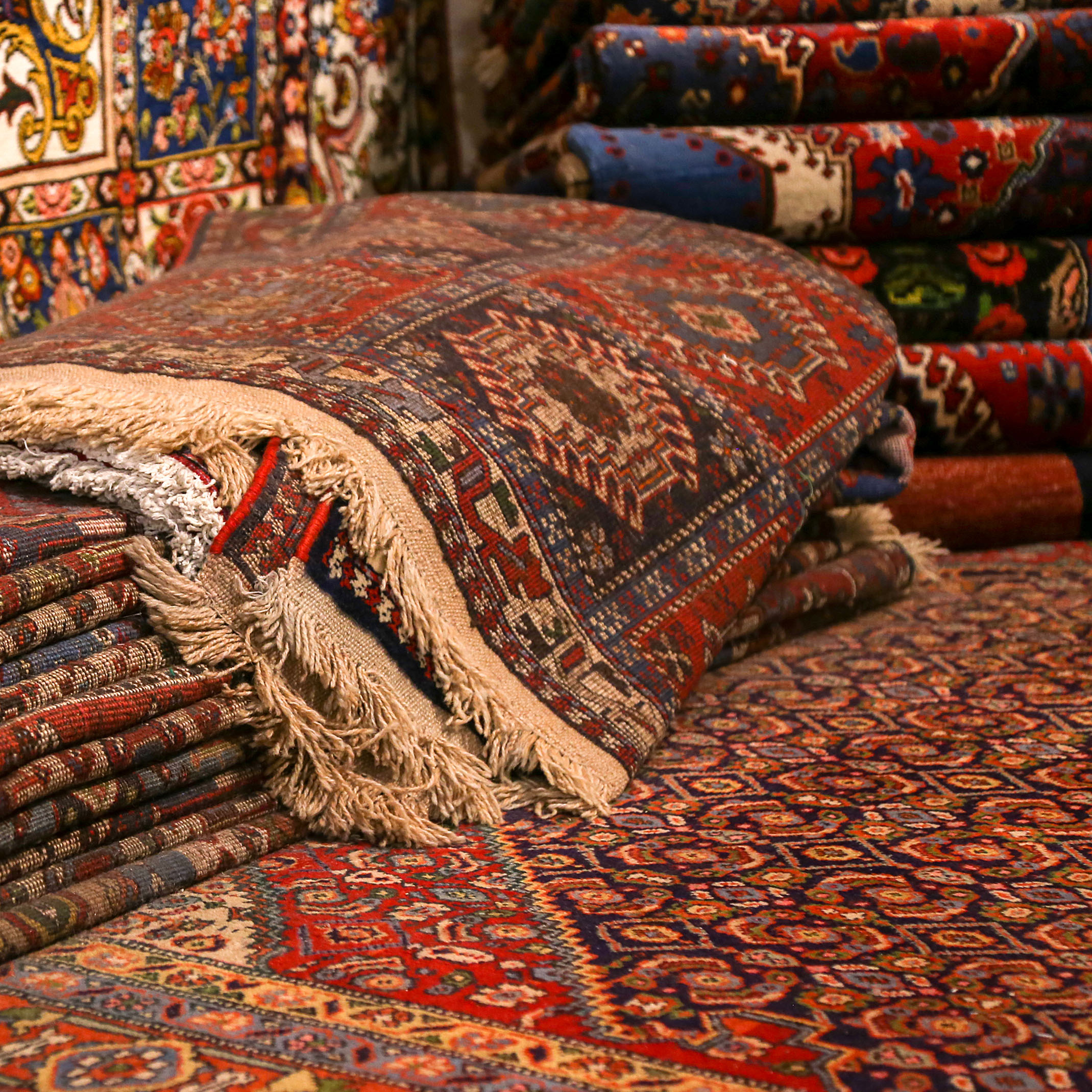
Invest Wisely - But Always for the Love of the Art
The final and most important principle of rug investment is also the most personal: buy rugs that genuinely move you as works of art. The investment case for quality Persian rugs is real and well-documented - but it is secondary to the primary experience of living with objects of extraordinary beauty, cultural depth, and human meaning. A rug that captivates you every time you enter the room, that tells a story you want to hear, that connects you to a creative tradition of 2,500 years - this rug will also captivate future buyers, will tell its story to future generations, and will maintain and build its value precisely because its beauty is genuine rather than merely fashionable.
Invest wisely, invest with knowledge, invest with patience. But above all, invest with love for the art that makes these extraordinary objects worth investing in at all.