


Cobalt blue is the blue that catches the eye. It is deep enough to feel serious, yet bright enough to feel lively. In a Persian rug, cobalt blue may cover the whole field, frame the design as a border, or appear in small, bright accents that light up a red rug.
This guide focuses on cobalt blue. For the whole blue family, see our guide to blue Persian rugs, and for all colors, our guide to Persian rug colors.
1
Where the Name Comes From
Cobalt is a mineral that potters and glassmakers have used for centuries to make an intense blue. Persian potters in Kashan and other centers used cobalt for the deep blue of tiles, bowls, and the domes of mosques. That blue became one of the signature colors of Persian art. In rugs, cobalt blue is a name for color, not dye: rug dyers did not use cobalt, but they reached a similar strong blue with indigo.
Cobalt blue in a rug is a strong, saturated blue made with indigo, named after the cobalt blue of Persian tiles. It is brighter than navy and deeper than royal blue.
2
How Cobalt Blue Is Made
Every traditional blue in a Persian rug comes from indigo, and cobalt blue is no exception. The dyer dips wool into a fermented indigo vat and lets air turn it blue, again and again. For cobalt, the dyer stops before the wool reaches navy, at a point where the blue is deep but still bright. Clean, white wool helps, because it lets the blue stay clear. Our article on the dyeing process follows wool through the dye house.
3
Cobalt, Navy, Royal, and Persian Blue
•
Cobalt blue - Strong and saturated, between navy and royal.
•
Navy blue - Deeper and calmer.
•
Royal blue - Lighter and brighter.
•
Persian blue - The clear blue of tiles, often slightly lighter.
•
Ultramarine - Blue with a violet tint.
These names overlap, and different sellers use them differently. What sets cobalt apart is saturation: it looks strong, clean, and full, with no gray or brown in it.
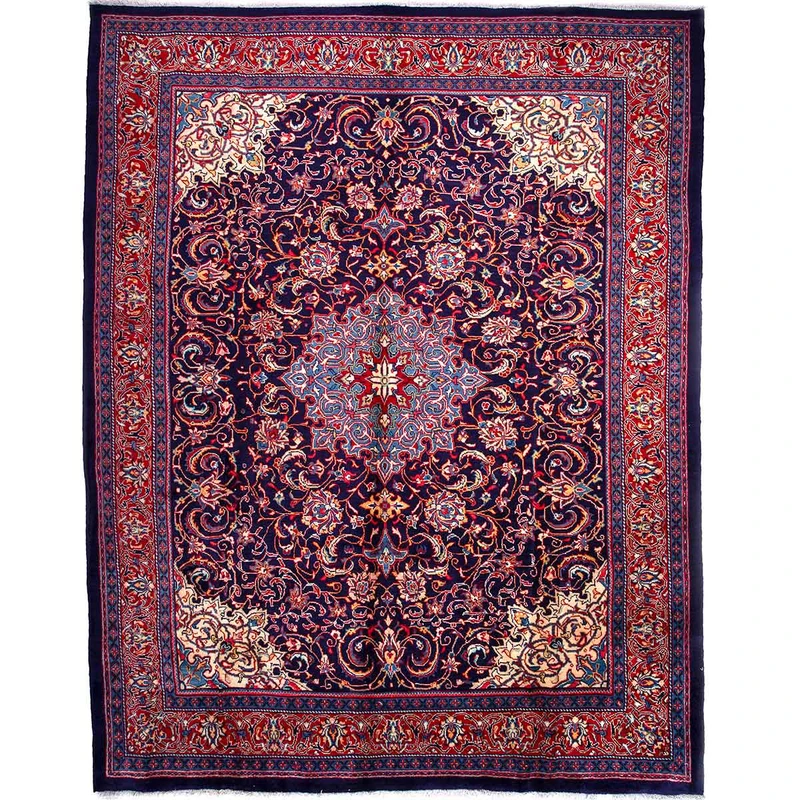
A Mahal rug of about 12.5 by 9.5 feet with a strong dark blue field, a light blue medallion, and ivory corners - Mahal Persian Rug 12x9 ft - Medallion Semi Antique Wool Silk Hand Knotted
4
Cobalt Fields in Mahal and City Rugs
In Mahal and other Arak region rugs, some fields are a strong dark blue that is brighter than navy. With a light blue medallion and ivory corners, such a field feels fresh and lively rather than dark. Kashan and Tabriz rugs also use strong blues in fields, medallions, and borders. Our Mahal rug guide explains the region.
5
Cobalt Accents in Village and Tribal Rugs
Village and tribal weavers loved strong blue as an accent. In Bakhtiari rugs, bright blue flowers and outlines stand out against red, ivory, and green panels. In Heriz rugs, a strong blue medallion or border gives the bold red field a powerful contrast. In Qashqai and Shiraz rugs, small cobalt motifs sparkle among the madder red. Our Bakhtiari rug guide describes the region.
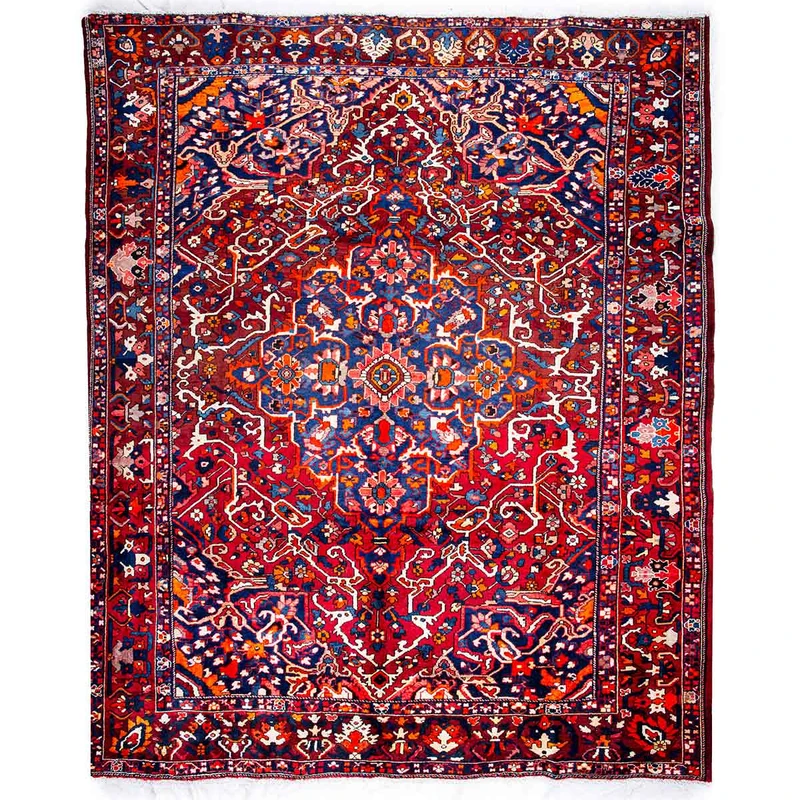
A Bakhtiari rug of about 12.75 by 10.25 feet with a red field and bright blue accents - Bakhtiari Persian Rug 12x10 ft - Medallion Semi Antique Wool Hand Knotted
6
Cobalt Blue and Red
Strong blue and madder red are the classic pair of Persian weaving. When the blue is cobalt rather than navy, the pair looks brighter and more energetic. A red rug with cobalt accents feels lively and festive; a cobalt field with a red medallion feels bold and confident. If you want a rug that brings energy to a room, this pairing is one of the strongest.
7
Cobalt Blue and the Colors of Persian Tiles
Persian tilework is one of the great sources of inspiration for Persian rugs. The domes and portals of Isfahan, Mashhad, and Kashan are covered with deep blue, turquoise, white, and yellow tiles, and many rug designs share their palmettes, arabesques, and medallions. When a rug uses a strong cobalt blue next to turquoise and ivory, it echoes those tiles directly. Isfahan and Nain rugs often show this tile palette in its most refined form.
8
How to Recognize Cobalt in a Rug
Because the names of blues overlap, it helps to know what to look for. Cobalt blue looks saturated: when you compare it with the navy border of the same rug, it is lighter and brighter; when you compare it with a light blue flower, it is clearly deeper. It also looks clean, without the gray of steel blue or the violet of ultramarine. In daylight, a cobalt area seems to glow slightly, while navy seems to absorb light.
In many rugs, cobalt is not the main color but a strong accent. A few cobalt flowers in a red field can change the whole mood of the rug, making it look brighter and more lively. When you shop, look at the small details as well as the field.
9
Cobalt Blue in Small Rugs and Runners
Strong blue suits small rugs and runners especially well. In a hallway or entry, a runner with cobalt accents brings color into a narrow space and looks bright even in low light. In a bathroom or by a bed, a small rug with strong blue feels clean and fresh. Village and tribal pieces in these sizes often carry the brightest blues.
10
Cobalt Blue Rugs in Living Rooms
A cobalt rug makes a living room feel fresh. It works beautifully with white walls, pale wood, and simple modern furniture, and it can also bring color to a room full of neutrals. In a traditional room, a cobalt rug with red and ivory details pairs with dark wood and brass.
11
Cobalt Blue Rugs in Bedrooms and Kitchens
In a bedroom, a cobalt rug brings color without heat. Pair it with white bedding and pale walls for a crisp, coastal feeling. In a kitchen or breakfast room, a cobalt runner or small rug echoes blue and white tiles and china. Our size guide explains how to choose the right size.
12
Cobalt Blue in Dining Rooms
A dining room is a good place for a bold rug, because the table and chairs break up the pattern and the room is used mostly in the evening. A rug with a strong blue field or strong blue accents looks rich under warm light and pairs well with white china, blue and white porcelain, and polished wood. Choose a size that extends about 24 inches beyond the table on every side so the chairs stay on the rug when pulled out.
13
Pairing Colors with a Cobalt Blue Rug
•
White - The cleanest contrast, like blue and white tiles.
•
Madder red - The classic partner.
•
Yellow and gold - Warm, bright contrast.
•
Pale wood - Light oak and ash keep the room fresh.
•
Gray - A calm, modern backdrop.
14
Cobalt Blue and Light
Cobalt blue keeps its brightness better than navy in dim rooms. In cool daylight it looks crisp; under warm bulbs it looks deeper and slightly warmer. Because it is saturated, it photographs fairly well, but screens may still show it brighter or darker than it really is. Ask us for daylight photos if you are unsure.
15
Cobalt Blue and Sunlight
Indigo is one of the most lightfast natural dyes, so cobalt blue holds its color well. Over many years in strong sun, it may soften toward a lighter, slightly grayer blue. Rotate the rug every six to twelve months and limit long hours of direct sun.
16
Caring for a Cobalt Blue Rug
Vacuum regularly with suction only. Blot spills with cold water and never rub. Avoid bleach and strong cleaners, which can leave pale spots on blue wool. Have the rug washed by a professional every few years. Our care instructions explain each step.
17
Frequently Asked Questions
Is cobalt used to dye Persian rugs?
No. Cobalt blue in a rug is made with indigo; the name comes from the cobalt blue of Persian tiles.
What is the difference between cobalt and navy?
Cobalt is brighter and more saturated; navy is deeper and calmer.
Which Persian rugs have cobalt blue?
Mahal, Kashan, and Tabriz rugs have cobalt fields and borders; Bakhtiari, Heriz, and Qashqai rugs use cobalt accents.
Does cobalt blue fade?
Very little. Over many years of strong sun, it may soften slightly.
18
Choose Your Cobalt Blue Rug
Browse our cobalt blue rugs, widen your search with royal blue and blue rugs, and ask our experts if you would like help choosing.