


Ochre is the color of the earth itself. Named after the natural clay pigment used by painters since ancient times, it is a warm yellow-brown that feels solid and natural. In a Persian rug, ochre brings the warmth of the desert and the hills, and it sits easily beside red, navy, ivory, and green.
This guide focuses on ochre. For the whole yellow family, see our guide to yellow Persian rugs, and for all colors, our guide to Persian rug colors.
1
What We Mean by Ochre
Ochre is an earthy yellow-brown. It is browner than mustard and gold, more yellow than camel, and warmer than sand. Some ochres lean toward gold; others, toward a light brown. Next to red, ochre looks warm and earthy; next to navy, it looks golden and strong.
Ochre is an earthy yellow-brown named after the clay pigment. In rugs it is made with a yellow dye on brown-toned wool or with a touch of walnut brown, and it often appears in medallions and soft faded fields.
2
How Ochre Is Made
Painters made ochre from natural clay, but rug dyers made it with plants. A yellow dye such as weld on naturally beige or light brown wool gives an earthy yellow; adding a little brown from walnut husk or pomegranate rind deepens it toward ochre. Ochre can also come from age, when golds and yellows soften and brown over the years. Our article on the dyeing process follows wool through the dye house.
3
Ochre and Other Warm Colors
•
Ochre - Earthy yellow-brown.
•
Gold - Brighter and more amber.
•
Antique gold - Softer and more golden.
•
Camel - A natural tan.
•
Copper - Redder and more orange.
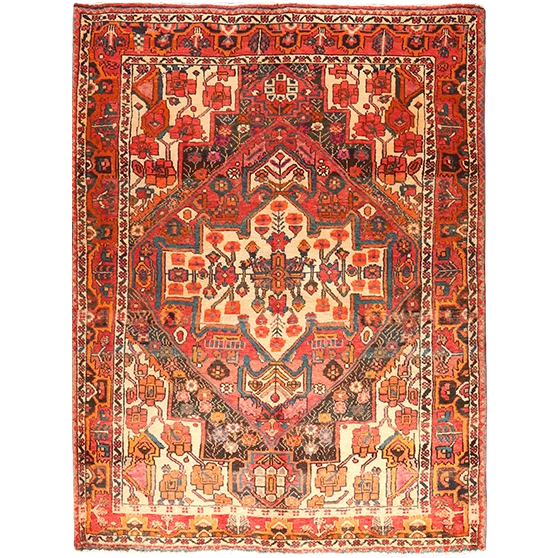
A Bakhtiari rug of about 7 by 5.5 feet with a red field and a stepped ochre and ivory medallion - Bakhtiari Persian Rug 7x5 ft - Medallion Semi Antique Wool Hand Knotted
4
Ochre Medallions in Bakhtiari and Village Rugs
In Bakhtiari rugs and other village rugs, ochre often fills stepped medallions on red fields. The earthy yellow against the madder red looks warm and bold, and ivory outlines make the medallion stand out. These rugs are sturdy and lively. Our Bakhtiari rug guide describes the region and its designs.
5
Ochre in Tabriz Rugs
Tabriz rugs in soft palettes sometimes have faded ochre-sand fields with gentle medallions and borders. These rugs feel warm and calm, and they suit modern homes with natural materials. Our Tabriz rug guide explains the grades and eras of Tabriz weaving.
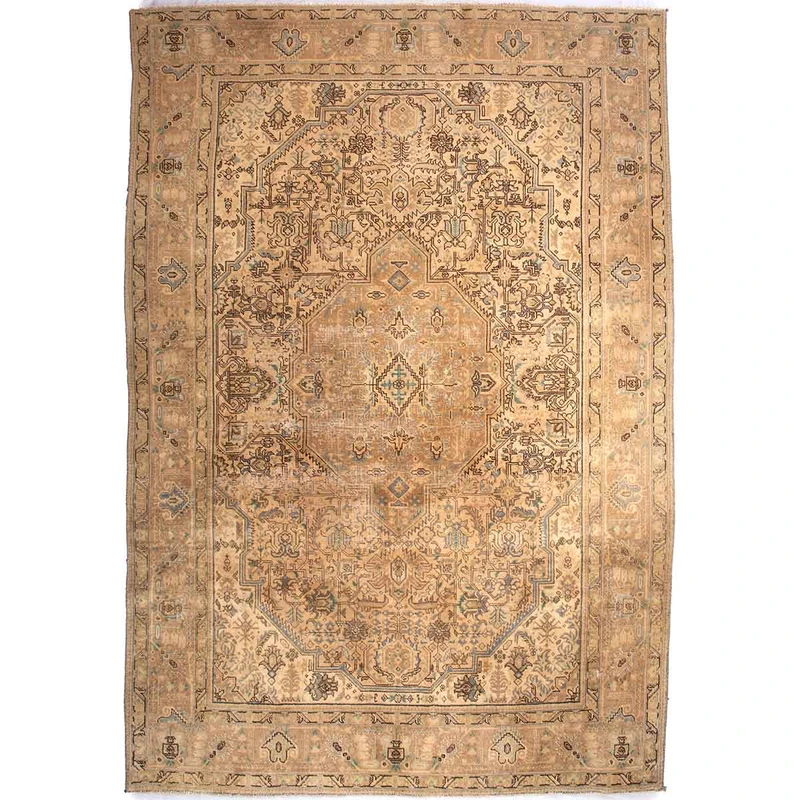
A Tabriz rug of about 9.75 by 6.5 feet with a faded ochre-sand field - Tabriz Persian Rug 9x6 ft - Medallion Semi Antique Wool Silk Hand Knotted
6
Ochre in Tribal Rugs
Tribal weavers used earthy yellows freely. In Qashqai and Shiraz rugs, ochre medallions, animals, and borders sit beside madder red and navy. In Baluch rugs, ochre and camel tones join dark red and brown. In Kurdish rugs, ochre often appears in medallions and borders.
7
How to Recognize Ochre in a Rug
Ochre is easiest to see in daylight. Compare it with bright gold: ochre is browner. Compare it with camel: ochre is more yellow. Compare it with mustard: ochre is earthier and less green. If a color looks like warm clay or sunbaked earth, it is in the ochre range.
8
Ochre and the Persian Landscape
Much of Persia is a land of desert, mountains, and dry hills, where the earth shows every shade of ochre, sand, and clay. Village and tribal weavers lived surrounded by these colors, and their rugs often reflect them. An ochre medallion on a red field echoes the land around the villages where the rug was made.
9
Ochre and Age
Many ochre tones in older rugs began as brighter yellows and golds. Over decades, yellow dyes soften and take on a brown cast, especially on natural wool. The result is a warm, earthy palette that blends gracefully with mellowed reds and blues. Compare the front with the back of an older rug: if the back is brighter, the front has mellowed naturally.
10
Ochre and Red
Ochre and madder red are a warm, earthy pairing. Together they look like the colors of the land at sunset. A red rug with ochre medallions feels bold and welcoming; an ochre field with red details feels warm and relaxed.
11
Ochre Rugs in Living Rooms
An ochre rug brings warmth and a natural feeling to a living room. It works with cream and warm white walls, wood floors, leather, and linen. In a room with many neutrals, ochre adds earthy color.
12
Ochre Rugs in Studies, Dining Rooms, and Bedrooms
In a study, ochre pairs with dark wood, leather, and books. In a dining room, it glows under warm light. In a bedroom, it feels warm and grounded. Our size guide explains how to choose the right size.
13
Ochre in Modern Rooms
Ochre has become a favorite color in modern interiors, in cushions, ceramics, and painted walls. An ochre Persian rug fits these rooms naturally, adding pattern and warmth. Pair it with white walls and black accents for a crisp look, or with terracotta and olive for a warm, earthy one.
14
Ochre in Small Rugs
Village and tribal rugs with ochre medallions often come in small sizes, about 5 by 7 feet or smaller. A small ochre and red rug brightens an entry, a bedside, or a reading corner. Browse our small rugs to see what is available.
15
Ochre and Wood Floors
Ochre looks natural on wood. On pale oak, it adds warmth and color; on dark walnut, it glows by contrast. On stone or terracotta tile floors, an ochre rug feels like part of the landscape, as if the earth colors of the floor continued into the rug.
16
Ochre Through the Seasons
Ochre is a natural autumn color, at home with rust, olive, and brown. In winter, it brings warmth to a room; in summer, it looks relaxed with white linen and pale blue. An ochre rug adapts easily to changing cushions and throws.
17
Seeing Ochre on a Screen
Earthy colors are hard for cameras. A photo may show ochre as bright gold, as camel, or as brown, depending on the light and the screen. When you look at an ochre rug online, compare it with any ivory or red in the same photo, and ask us for extra pictures taken in daylight near a window. We are happy to describe the color in words as well.
18
Pairing Colors with an Ochre Rug
•
Cream and ivory - Warm and bright.
•
Madder red and rust - Earthy warmth.
•
Navy - Strong contrast.
•
Olive and sage - Natural greens.
•
Natural wood - Oak and walnut.
19
Ochre and Light
Ochre glows under warm light and looks clearer in daylight. In a dim room, it can look more brown. Place it where it gets some natural light if you want the yellow to show.
20
Ochre and Sunlight
Yellow dyes are less lightfast than red or blue, so ochre can continue to soften over many years of strong sun. Rotate the rug every six to twelve months and limit long hours of direct sun.
21
Caring for an Ochre Rug
Vacuum regularly with suction only. Blot spills with cold water and never rub. Avoid bleach and strong cleaners. Have the rug washed by a professional every few years. Our care instructions explain each step.
22
Questions to Ask Before You Buy
•
Where is the ochre? - Medallion, border, or field?
•
Is it original or mellowed? - Compare the front with the back.
•
What colors sit beside it? - Red makes ochre warm; navy makes it golden.
•
How does it look in daylight? - Ask for photos near a window.
23
Frequently Asked Questions
How is ochre made in Persian rugs?
With a yellow dye on brown-toned wool, sometimes with a touch of walnut or pomegranate brown.
Which rugs have ochre?
Bakhtiari, Tabriz, Qashqai, Shiraz, Baluch, and Kurdish rugs, among others.
What is the difference between ochre and camel?
Ochre is more yellow; camel is a softer, natural tan.
Does ochre fade?
It can soften slowly over many years of strong sun.
24
Choose Your Ochre Rug
Browse our ochre rugs, compare them with gold and camel, and ask our experts if you would like help choosing.