


Olive is the most earthy of the greens. It sits between green, brown, and gold, and it carries the warmth of all three. In a Persian rug, olive rarely looks bright. It looks rich, settled, and natural, and it makes the colors around it look warmer.
This guide focuses on olive. For the whole green family, see our guide to green Persian rugs, and for all colors, our guide to Persian rug colors.
1
What We Mean by Olive
Olive is a muted green with a brown or golden cast. It is darker and browner than moss green, warmer than sage green, and much more muted than emerald. Some olives lean toward green, others toward brown or antique gold. Next to ivory, olive looks clearly green; next to brown, it looks golden.
Olive is a muted green with a brown and golden cast. Dyers made it from yellow and a little indigo on warm-toned wool, sometimes with a brown dye, and it is common in the borders of city rugs.
2
How Olive Is Made
Olive can be made in several ways. A dyer might combine a yellow dye such as weld with a light indigo dip on beige or light brown wool, so the green comes out warm and muted. Or the dyer might add a little brown from walnut husk or a similar dye to a green. In some rugs, olive is a green whose blue was light and whose yellow has turned golden with age. Our article on the dyeing process follows wool through the dye house.
3
Olive in Older Rugs
Olive is one of the most common greens in older Persian rugs. As rugs age, bright greens often soften and warm, and greens dyed on natural wool take on a brown cast. Borders and leaves that began as green may now read as olive. This change gives older rugs their warm, mellow look. When you look at an older rug, compare the front with the back: if the back is greener, the front has mellowed naturally.
4
Olive and Other Greens
•
Olive - Muted green with brown and gold.
•
Moss green - Lighter and more yellow.
•
Sage green - Grayer and cooler.
•
Forest green - Darker and cooler.
•
Antique gold - More gold, less green.
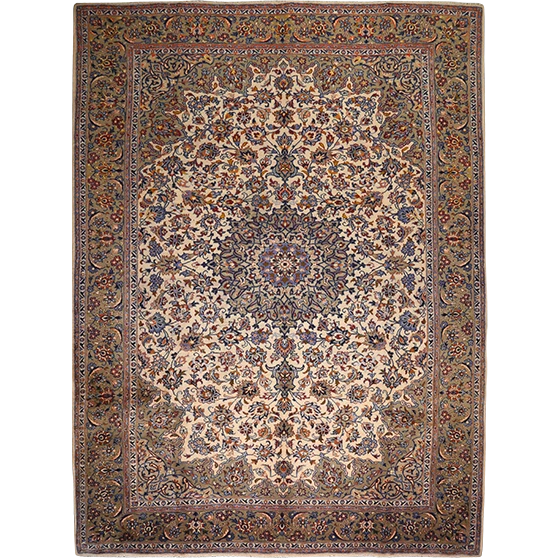
A Najafabad rug of about 12.75 by 9.5 feet with ivory flowers and an olive-brown border - Najafabad Persian Rug 12x9 ft - Medallion Semi Antique Wool Silk Hand Knotted
5
Olive Borders in Najafabad and Isfahan Rugs
Najafabad rugs bring Isfahan designs to room size, and many use olive and olive-brown in their borders and leaves. An olive border around an ivory field looks warm and natural, softer than navy and less heavy than red. These rugs suit rooms with wood floors and warm walls. Our Najafabad rug guide explains the town and its rugs.
6
Olive in Kashmar and Khorasan Rugs
In Kashmar rugs, olive and rose palmettes often appear on navy fields, part of the busy, many-colored designs these rugs are known for. Olive on navy looks warm and golden, and it blends with rose and ivory into a rich, glowing palette. Our Kashmar rug guide describes these rugs.
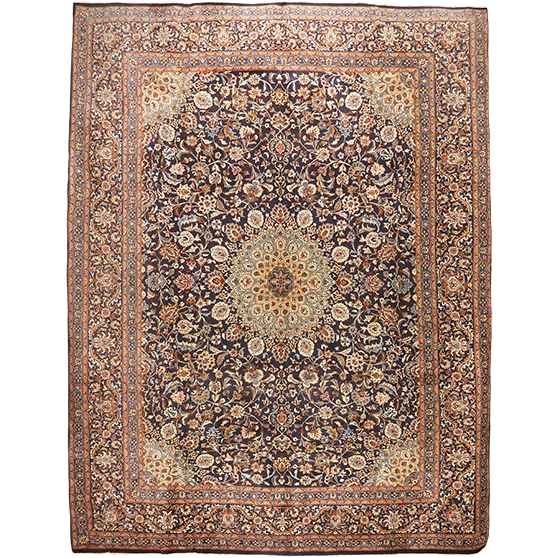
A Kashmar rug of about 13 by 10 feet with a navy field and olive and rose palmettes - Kashmar Persian Rug 13x10 ft - Shah Abbasi Semi Antique Wool Hand Knotted
7
Olive in Other Rugs
In Kashan and Tabriz rugs, olive appears in leaves, vines, and borders, especially in ivory-field rugs and in soft palettes. In Kerman rugs, olive sits among many shades of green and rose. In village and tribal rugs, olive often marks a green that has mellowed.
8
How to Recognize Olive in a Rug
Olive is easiest to recognize by comparison. Next to a fresh green, it looks browner and more muted. Next to brown or camel, it looks clearly green. Next to gold, it looks greener and darker. If a green looks warm, earthy, and golden, it is in the olive range.
9
Olive and Navy
Olive and navy are a beautiful and less common pairing. On a navy field, olive palmettes and leaves look warm and golden, and they soften the deep blue. If you love navy but want a warmer rug, look for olive details.
10
Olive and Rose
Olive also pairs naturally with rose and dusty pink. Together they look like a garden of faded roses and leaves, warm, gentle, and romantic. Many older rugs show this pairing, often with ivory and soft gold.
11
Olive Rugs in Living Rooms
A rug with olive brings warmth and a natural feeling to a living room. It works with cream and warm white walls, wood floors, leather, and linen. Olive also ties a rug to plants, olive wood, and earthy ceramics. In a room with many warm neutrals, an olive and ivory rug adds color without breaking the calm.
12
Olive Rugs in Dining Rooms, Studies, and Bedrooms
In a dining room, olive borders frame the table in a warm, earthy color. In a study, olive pairs with dark wood and leather. In a bedroom, it feels calm and grounded. Our size guide explains how to choose the right size.
13
Olive in Modern Rooms
Olive has become a favorite color in modern interiors, in velvet sofas, painted cabinets, and linen. A Persian rug with olive tones fits these rooms naturally, adding pattern and history. Pair it with white walls and pale wood for a fresh look, or with rust, terracotta, and brass for a warmer, richer one.
14
Olive in Large Rugs
Olive borders and leaves are common in large city rugs, especially Najafabad, Kashmar, and Kashan rugs of room size. In a large living or dining room, an olive border frames the space in a warm, natural color that pairs easily with wood floors and furniture. Browse our 9x12 and larger rugs to see what is available.
15
Olive Through the Seasons
Olive is a color that feels at home all year. In summer, it looks fresh with white walls and linen; in autumn, it looks rich with rust, gold, and wool; in winter, it looks warm under lamplight. An olive rug is a good choice if you like to change pillows and throws with the seasons, because almost any warm or natural color works beside it.
16
Olive and Wood
Olive looks natural with wood of every kind. On pale oak, it looks fresh and earthy; on dark walnut, it looks rich and golden. With olive wood bowls and boards in a kitchen or dining room, an olive rug ties the floor to the table.
17
Pairing Colors with an Olive Rug
•
Cream and ivory - Warm and bright.
•
Dusty rose - A soft, romantic partner.
•
Rust and terracotta - Earthy warmth.
•
Brass and bronze - Warm metals.
•
Natural wood - Oak and walnut.
18
Olive and Light
Olive looks green in daylight and more golden under warm bulbs. In a dim room, it can look brown. Place an olive rug where it gets some natural light if you want the green to show.
19
Olive and Sunlight
Greens are less stable than reds and blues, so olive can continue to soften and warm over many years of strong sun. Rotate the rug every six to twelve months and limit long hours of direct sun.
20
Caring for an Olive Rug
Vacuum regularly with suction only. Blot spills with cold water and never rub. Avoid bleach and strong cleaners. Have the rug washed by a professional every few years. Our care instructions explain each step.
21
Questions to Ask Before You Buy
•
Where is the olive? - Border, leaves, palmettes, or field?
•
Is it green or brown? - Ask for daylight photos to see the balance.
•
What is the field color? - Ivory makes olive fresh; navy makes it golden.
•
Is it original or mellowed? - Compare the front with the back.
22
Frequently Asked Questions
How is olive made in Persian rugs?
From a yellow dye and a little indigo on warm-toned wool, sometimes with a brown dye.
Why is olive common in older rugs?
Greens soften and warm with age, and many become olive.
Which rugs have olive?
Najafabad, Kashmar, Kashan, Tabriz, and Kerman rugs, among others.
What is the difference between olive and moss?
Olive is browner and darker; moss is lighter and more yellow.
23
Choose Your Olive Rug
Browse our olive rugs, compare them with moss green and antique gold, and ask our experts if you would like help choosing.