


Teal is the deep, quiet side of blue-green. It has the calm of blue and the life of green, and it looks rich and settled rather than bright. In Persian rugs, teal is often a supporting color that frames and outlines, but in some rugs it fills medallions and leaves with a jewel-like depth.
This guide focuses on teal. For greens, see our guide to green Persian rugs, for blues our guide to blue Persian rugs, and for all colors, our guide to Persian rug colors.
1
What We Mean by Teal
Teal is a deep blue-green. It is darker than turquoise, bluer than forest green and emerald, and greener than navy. In rugs, teal can lean toward blue or toward green, and the same rug may show both.
Teal is a deep blue-green made from indigo and yellow. It is also the color many old greens become, because their yellow softens before their blue.
2
How Teal Is Made
Traditional Persian dyers had no single green or blue-green dye. They made green by dyeing wool twice: once with indigo for blue and once with a yellow dye, most often weld (esparak). A strong indigo dip with a lighter yellow gives teal; more yellow gives a fresher green. The order and strength of the two baths let the dyer tune the color. Our article on the dyeing process follows wool through the dye house.
3
Why Old Greens Turn Teal
Indigo is one of the most lightfast dyes; most yellow dyes are not. Over many years of light, the yellow part of a green softens first, while the blue stays. As a result, greens in older rugs often drift toward teal and blue-green. This is why so many antique rugs show teal leaves and blue-green borders that were once a brighter grass green. The change is natural and gives older rugs their gentle, harmonious color.
4
Teal and Other Blue-Greens
•
Teal - Deep blue-green.
•
Turquoise - Lighter and brighter.
•
Emerald - Rich green with less blue.
•
Forest green - Dark green with less blue.
•
Sage green - Soft gray-green.
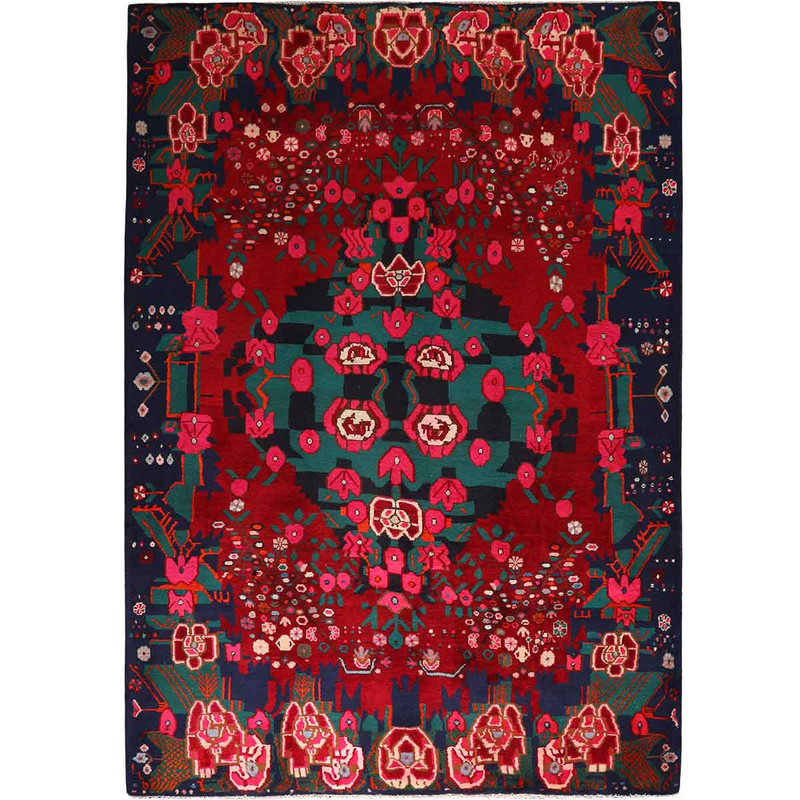
An Afshar rug of about 9.5 by 6.5 feet with a dark field, a teal-green medallion, and red roses - Afshar Persian Rug 9x6 ft - Medallion Semi Antique Wool Hand Knotted
5
Teal in Afshar Rugs
Afshar weavers of Kerman province are known for bold, colorful designs, and their rugs often use teal and blue-green beside madder red, ivory, and navy. In some Afshar rugs, a teal medallion sits on a dark field surrounded by flowers and roses, a striking and unusual combination. Our Afshar rug guide describes the tribe and its weaving.
6
Teal in Zanjan and Village Rugs
In Zanjan and other village rugs of northwestern Persia, teal motifs often appear on navy or red fields, in medallions, leaves, and small geometric figures. On a navy field, teal looks like a lighter, greener echo of the blue; on a red field, it gives cool contrast.
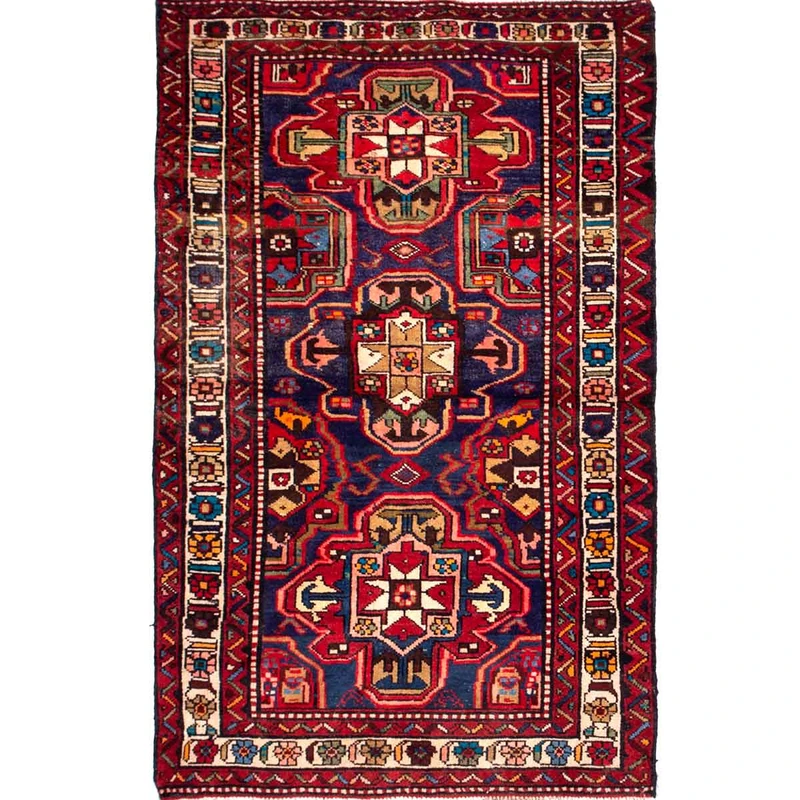
A Zanjan rug of about 7 by 4 feet with a navy field and teal and red motifs - Zanjan Persian Rug 7x4 ft - Medallion Semi Antique Wool Hand Knotted
7
Teal in City Rugs
In Kerman and Kashan rugs, teal and blue-green appear in leaves, vines, and borders among many other colors. In Tabriz rugs, teal sits beside red, ivory, and navy in medallions and borders. In older city rugs, many of these teals began as greens and have softened toward blue over time.
8
Teal in Tribal Rugs
In Qashqai, Shiraz, and Baluch rugs, small teal details appear in medallions, animals, and borders. In Baluch rugs especially, deep blue-green joins dark red and brown to create a rich, shadowy palette.
9
How to Recognize Teal in a Rug
Teal is easiest to recognize by comparison. Next to navy, it looks greener; next to a grass green leaf, it looks bluer and deeper; next to turquoise, it looks darker and calmer. In older rugs, look for leaves and vines that seem blue-green on the front and greener on the back: these are softened greens that have become teal.
10
Teal in Dark Palettes
Teal looks especially rich in rugs with dark palettes. On a navy or dark red field, teal details glow softly without strong contrast, giving the rug depth and a jewel-like quality. Baluch, Zanjan, and some Afshar rugs use this effect well. If you love dark rugs but want a touch of color, look for teal details.
11
Teal and Red
Teal and red are near opposites on the color wheel, so they bring out each other's strength. A red rug with teal leaves and borders looks rich and balanced; a teal medallion on red looks bold. Because teal is deep, the pairing feels warm and mature rather than bright.
12
Teal Rugs in Living Rooms
A rug with teal brings depth and color to a living room. It works with white, cream, and warm gray walls, and with dark wood, leather, and brass. Teal also ties a rug to teal or peacock blue fabric, velvet, and art. In a room with many neutrals, a teal and red rug can be the main source of color.
13
Teal Rugs in Studies, Dining Rooms, and Bedrooms
In a study or library, teal pairs well with dark wood and books. In a dining room, it looks rich under warm light. In a bedroom, it feels calm and enclosing. Our size guide explains how to choose the right size for each room.
14
Teal in Modern and Eclectic Rooms
Teal has become a favorite color in modern interiors, in velvet sofas, painted cabinets, and accent walls. A Persian rug with teal details ties these modern colors to a traditional floor, so the room feels collected rather than matched. In an eclectic room with many patterns and colors, a red and teal rug can be the anchor that holds everything together. Pair it with warm wood and brass to keep the room inviting, or with white and black for a sharper, graphic look.
15
Teal in Small Rugs and Runners
Small village rugs from Zanjan and the Hamadan region often carry teal details on navy or red fields. In an entry, a hallway, or beside a bed, such a rug brings a deep, quiet color into a small space. Teal hides everyday dirt well, which makes these rugs practical as well as beautiful.
16
Pairing Colors with a Teal Rug
•
Ivory and cream - Bright contrast.
•
Madder red and rust - Warm opposites.
•
Mustard and gold - Rich, warm accents.
•
Dark wood - Walnut and mahogany.
•
Brass and copper - Warm metals.
17
Teal and Light
Teal changes with light. In cool daylight it looks bluer; under warm bulbs it looks greener and deeper. In a dim room, teal can look almost navy, so choose a teal rug with ivory or red details if your room is dark.
18
Teal and Sunlight
Because teal combines indigo with yellow, and yellow fades faster, teal can shift slowly toward blue after many years of strong sun. Rotate the rug every six to twelve months and limit long hours of direct sun.
19
Caring for a Teal Rug
Vacuum regularly with suction only. Blot spills with cold water and never rub. Avoid bleach and strong cleaners. Have the rug washed by a professional every few years. Our care instructions explain each step.
20
Questions to Ask Before You Buy
•
Is the teal original or a softened green? - Compare the front with the back.
•
Where is the teal? - Medallion, leaves, border, or small details?
•
How does it look in daylight? - Ask for photos near a window.
•
What else is in the rug? - Red and ivory make teal glow; navy makes it calm.
21
Frequently Asked Questions
How is teal made in Persian rugs?
By dyeing wool with indigo and a yellow dye such as weld, with more blue than yellow.
Why do old green areas look teal?
Yellow dyes fade faster than indigo, so greens drift toward blue-green over time.
Which rugs have teal?
Afshar, Zanjan, Kerman, Kashan, Tabriz, and Baluch rugs, among others.
What is the difference between teal and turquoise?
Teal is deeper and darker; turquoise is lighter and brighter.
22
Choose Your Teal Rug
Browse our teal rugs, compare them with turquoise and green rugs, and ask our experts if you would like help choosing.