


Terracotta means baked earth, and that is exactly how it feels: warm, natural, and grounded. It is softer than a bright red and earthier than a true orange, and it has the relaxed warmth of a Mediterranean courtyard or a Persian village in late afternoon. In a rug, terracotta makes a room feel welcoming and lived in.
This guide focuses on terracotta. For the whole orange family, see our guide to orange Persian rugs, for reds our guide to red Persian rugs, and for all colors, our guide to Persian rug colors.
1
What We Mean by Terracotta
Terracotta is an earthy orange-red. It is more orange than rust red and brick red, earthier and softer than burnt orange, and redder than copper. Next to navy, terracotta looks warm and glowing; next to ivory, it looks soft and earthy.
Terracotta is an earthy orange-red, the color of fired clay. Dyers made it with madder warmed by a yellow dye and softened by natural wool or a little brown.
2
How Terracotta Is Made
Terracotta comes from madder, the root that gives almost every traditional Persian red. On its own, madder gives reds from rose to deep crimson, depending on the mordant and the number of baths. To move toward terracotta, the dyer adds a yellow dye such as weld, which warms the red toward orange, and uses wool that is naturally cream or light brown, which softens it. A little brown from walnut husk can deepen it further. Our article on the dyeing process follows wool through the dye house.
3
Terracotta and Other Warm Colors
•
Terracotta - Earthy orange-red.
•
Rust red - Redder and darker.
•
Burnt orange - More orange and brighter.
•
Brick red - Redder and more muted.
•
Copper - Browner.
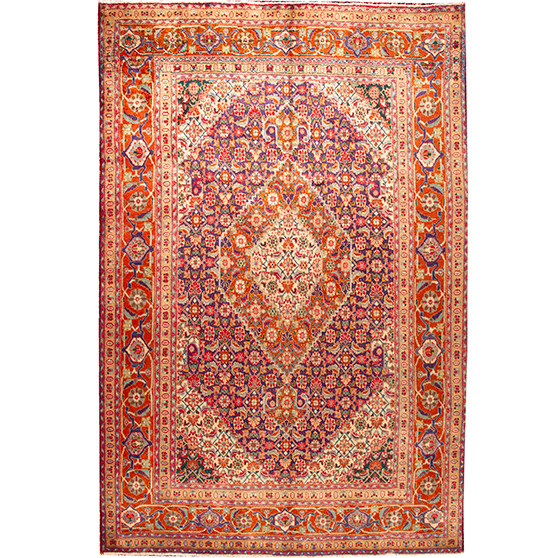
An Ardabil rug of about 10.25 by 6.75 feet with a terracotta Herati field and a diamond medallion - Ardabil Persian Rug 10x6 ft - Medallion Semi Antique Wool Silk Hand Knotted
4
Terracotta Fields in Ardabil Rugs
Ardabil rugs from northwestern Persia often have Herati fields with diamond medallions, and some use a warm terracotta ground. The small, repeating Herati motifs in ivory, navy, and green sit lightly on the earthy field, which gives the rug an even, textured look. Our Ardabil rug guide describes the city and its weaving, and our guide to the Herati design explains the motif.
5
Terracotta in Tabriz Rugs
Tabriz weavers sometimes use terracotta fields with blue diamond medallions and navy borders. The warm field and the cool blue create a lively, balanced contrast. Our Tabriz rug guide explains the grades and eras of Tabriz weaving.
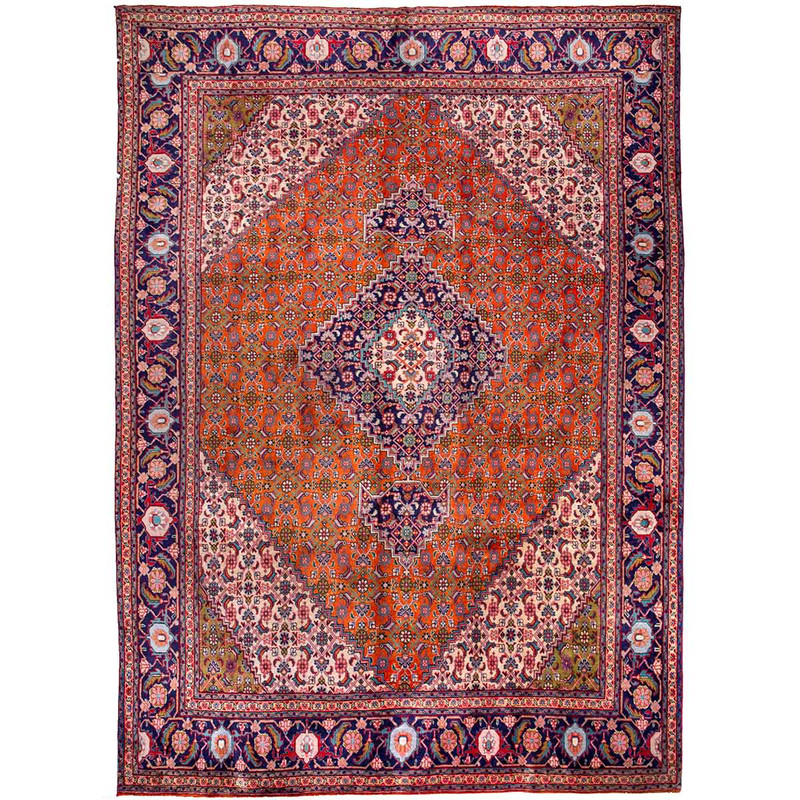
A Tabriz rug of about 11.5 by 8.25 feet with a terracotta field, a blue diamond medallion, and a navy border - Tabriz Persian Rug 11x8 ft - Medallion Semi Antique Wool Silk Hand Knotted
6
Terracotta in Village and Tribal Rugs
Village and tribal weavers often used earthy reds and oranges. In Heriz and Serapi rugs, soft brick and terracotta fields carry large angular medallions. In Qashqai and Shiraz rugs, terracotta appears in medallions and borders beside madder red and navy. In Kurdish rugs, terracotta tones fill fields and medallions.
7
How to Recognize Terracotta in a Rug
Terracotta is easiest to see in daylight. Compare it with any deep red in the rug: terracotta is more orange and softer. Compare it with bright orange: terracotta is earthier. Compare it with brown: terracotta is clearly red-orange. If a color looks like a clay flowerpot, it is in the terracotta range.
8
Terracotta and Age
Many terracotta tones in older rugs began as brighter reds. Over decades, madder can soften and warm, especially on natural wool, and a red field may settle into a gentle terracotta. This change gives older rugs a warm, relaxed glow. Compare the front with the back: if the back is redder, the front has mellowed naturally.
9
Terracotta and Blue
Terracotta and blue are a classic pairing. The warm earth color and the cool blue sit on opposite sides of the color wheel, so each makes the other look stronger. A terracotta field with blue medallions and navy borders looks lively and balanced, like a clay courtyard under a blue sky.
10
Terracotta Rugs in Living Rooms
A terracotta rug brings warmth and a relaxed, natural feeling to a living room. It works with white and cream walls, wood floors, linen, and leather. It also suits rooms with plants, pottery, and natural textures.
11
Terracotta Rugs in Kitchens, Dining Rooms, and Bedrooms
In a kitchen or dining room, terracotta feels warm and welcoming and pairs well with wood, ceramics, and tile. In a bedroom, it feels cozy and grounded. Under a dining table, choose a rug that extends about 24 inches beyond the table on every side. Our size guide has the details.
12
Terracotta in Modern Rooms
Terracotta is one of the most popular colors in modern interiors, in pottery, tiles, cushions, and painted walls. A terracotta Persian rug fits these rooms naturally, adding pattern and history to a contemporary palette. Pair it with white walls and black accents for a crisp look, or with olive and sand for a warm, earthy one.
13
Terracotta and Wood Floors
Terracotta looks natural on wood. On pale oak, it adds warmth; on dark walnut, it glows by contrast. On stone or clay tile floors, a terracotta rug feels like part of the floor itself, continuing its earthy color.
14
Terracotta Through the Seasons
Terracotta suits every season. In summer, it feels relaxed with white linen and blue accents; in autumn and winter, it feels warm with wool throws, rust, and olive. It is a good choice if you like to change cushions and throws with the seasons.
15
Terracotta in Small Rugs and Runners
Ardabil and village rugs with terracotta tones often come in long and small sizes. A terracotta runner brings warmth into a hallway or kitchen; a small terracotta rug warms an entry or a bedside. Because the color hides everyday dirt well, these rugs suit busy spaces. Browse our runners to see what is available.
16
Pairing Colors with a Terracotta Rug
•
White and cream - Fresh and bright.
•
Navy and soft blue - Cool contrast.
•
Olive and sage - Natural greens.
•
Sand and camel - Warm neutrals.
•
Natural wood - Oak and walnut.
17
Terracotta and Light
Terracotta glows under warm light and looks clearer in daylight. In a dim room, it can look more brown. Place it where it gets some natural light if you want its warm color to show.
18
Seeing Terracotta on a Screen
Earthy reds are hard for cameras. A photo may show terracotta as bright orange, as red, or as brown, depending on the light and the screen. Compare it with any ivory or navy in the same photo, and ask us for extra pictures taken in daylight near a window.
19
Terracotta and Sunlight
Madder is fairly lightfast, but the yellow that warms terracotta can soften faster. Over many years of strong sun, terracotta may drift toward a softer, pinker red. Rotate the rug every six to twelve months and limit long hours of direct sun.
20
Caring for a Terracotta Rug
Vacuum regularly with suction only. Blot spills with cold water and never rub. Avoid bleach and strong cleaners. Have the rug washed by a professional every few years. Our care instructions explain each step.
21
Questions to Ask Before You Buy
•
Is it more red or more orange? - Ask for daylight photos.
•
Where is the terracotta? - Field, medallion, or border?
•
What colors balance it? - Navy and ivory keep terracotta fresh.
•
Is the color original or mellowed? - Compare the front with the back.
22
Frequently Asked Questions
How is terracotta made in Persian rugs?
With madder warmed by a yellow dye and softened by natural wool or a little brown.
Which rugs have terracotta?
Ardabil, Tabriz, Heriz, Serapi, Qashqai, and Kurdish rugs, among others.
What is the difference between terracotta and rust?
Terracotta is more orange and earthy; rust is redder and darker.
Does terracotta fade?
Slowly. Over many years of strong sun, it may soften toward a pinker red.
23
Choose Your Terracotta Rug
Browse our terracotta rugs, compare them with rust red and burnt orange, and ask our experts if you would like help choosing.