


How to Clean a Persian Rug at Home: A Complete Guide
Los Angeles Home of Rugs on Nov 17th 2026
A hand-knotted Persian rug is one of the most durable furnishings you can own. Made from strong, lanolin-rich wool and natural fibers, a well-made rug can last for generations - but only if it is cared for sensibly. The good news is that most of that care is simple, inexpensive, and easy to do at home. Regular vacuuming, prompt attention to spills, occasional rotation, and, for some small and sturdy rugs, a careful hand wash will keep a rug looking its best for decades.
This guide explains everything you can safely do at home: how to recognize when a rug needs cleaning, the weekly routine that prevents most problems, how to test whether colors are stable, how to treat the most common stains, how to hand wash a small wool rug step by step, how to dry it properly, and - just as important - when to stop and call a professional. For the specialist services that a professional rug cleaner provides, see our companion guide to professional rug washing.
1
Why Cleaning Matters
Dirt is not only a cosmetic problem. Fine grit carried in on shoes settles deep into the pile, close to the base of the knots. Every time someone walks across the rug, those sharp particles rub against the wool fibers like sandpaper, gradually cutting and weakening them. Over years, this hidden abrasion is one of the main causes of premature wear. Dirt also dulls colors, attracts moths and other insects, and can hold moisture that encourages odors and mildew.
Keeping a rug clean therefore protects both its beauty and its life. A rug that is regularly vacuumed and occasionally washed will look brighter, feel softer, and last far longer than one that is left to collect dust.
2
How to Tell When a Rug Needs Cleaning
A few simple checks will tell you whether your rug needs more than routine vacuuming:
•
The touch test - run your hand across the pile. If it feels rough, sticky, or gritty rather than soft and smooth, the rug needs cleaning.
•
The tap test - fold back a corner and tap or gently beat the back of the rug with your hand. If a cloud of dust or fine grit falls out, dirt has built up deep in the pile.
•
The color test - compare a high-traffic area with a protected area, such as under a sofa. If the exposed area looks noticeably duller or grayer, it is time to clean.
•
The smell test - a musty or unpleasant odor usually means dirt, moisture, or an old spill needs attention.
As a general guide, a rug in a typical home benefits from a thorough wash every two to five years, depending on traffic, pets, and children. Rugs in entryways and busy family rooms may need it more often, while rugs in bedrooms or formal rooms can go longer.
3
The Weekly Routine - Prevention Is the Best Cleaning
Vacuum Correctly
Regular vacuuming is the single most important thing you can do for a Persian rug. Aim for once a week in busy areas and every two weeks elsewhere. Use suction only, or set the beater bar to its highest position or turn it off, because a rotating brush can pull at fibers and fringes. Vacuum in the direction of the pile - run your hand across the rug; the direction in which it feels smooth is the direction of the pile. Never vacuum the fringe; the vacuum can catch and tear the threads. Instead, gently brush the fringe by hand or with a soft brush.
Vacuum the Back Occasionally
Every few months, turn the rug over and vacuum the back. The vibration loosens grit trapped deep in the pile, which then falls through to the floor beneath. Then turn the rug back over, sweep or vacuum the floor, and vacuum the front again.
Rotate the Rug
Turn the rug 180 degrees once or twice a year. This evens out wear from foot traffic and exposure to sunlight, so that one end does not fade or wear faster than the other.
Use a Good Rug Pad
A quality rug pad keeps the rug from slipping, absorbs the impact of footsteps, reduces wear, and allows air to circulate under the rug. Choose a pad made for hand-knotted rugs, slightly smaller than the rug itself, and avoid cheap rubber pads that can stick to floors or break down over time.
Shake Out Small Rugs
Small rugs and runners can be taken outside and gently shaken or beaten from the back with a soft carpet beater. Never shake a rug violently by one end, as this can strain the foundation and damage the fringe.
Shoes off at the door is one of the best gifts you can give a Persian rug. In many Persian homes it has always been the custom, and it is a large part of the reason that rugs there last for generations.
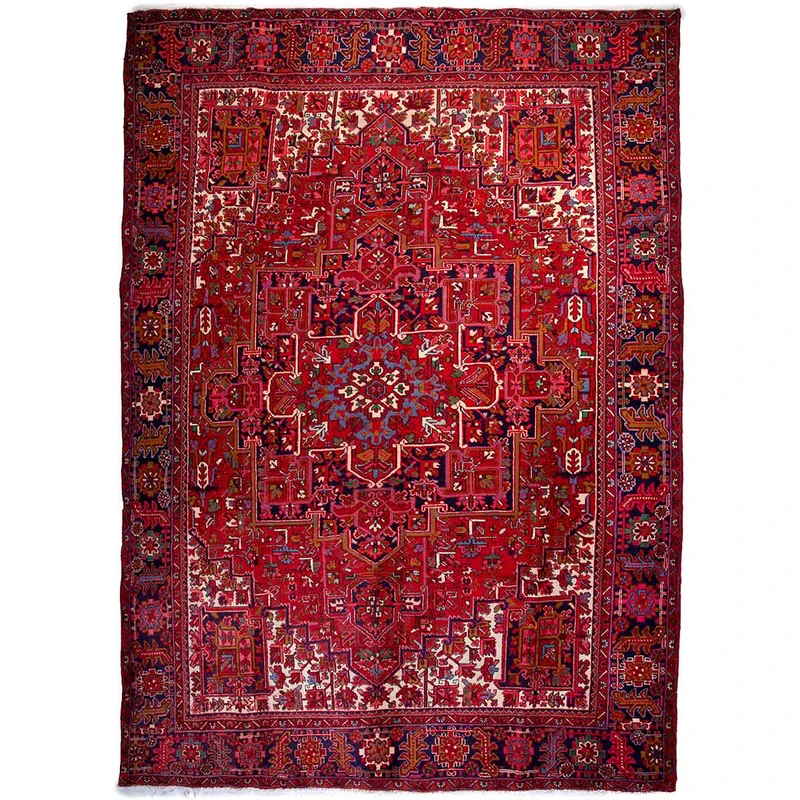
A sturdy Heriz in madder red and navy blue, a classic choice for busy rooms - Heriz Persian Rug 13x9 ft - Medallion Semi Antique Wool Hand Knotted
4
The Colorfast Test - Always Do This First
Before you use any water or cleaning solution on a rug, you must check that its colors will not run. This simple test takes only a few minutes and can prevent permanent damage:
•
Dampen a white cloth - use cool water, or water with a small amount of the cleaning solution you plan to use.
•
Press it firmly against each color in a small, inconspicuous area, especially the reds, dark blues, and any very bright colors.
•
Hold for 30 seconds or more, then check the cloth.
•
Read the result - if any color transfers to the cloth, do not wash the rug at home. Take it to a professional.
Even if the colors pass the test, work carefully and avoid soaking the rug excessively. Our article on mordants explains why well-dyed rugs are stable and why some dyes can still move when wet.
5
Treating Spills and Stains
Accidents happen in every home. The key is to act quickly and gently. The general rules for any spill are the same:
•
Act immediately - the sooner you treat a spill, the less chance it has to set into the fibers.
•
Blot, do not rub - use a clean white cloth or paper towels and press down to absorb the liquid. Rubbing spreads the stain and damages the pile.
•
Work from the outside in - this prevents the stain from spreading.
•
Use cool water - hot water can set some stains and cause dyes to bleed.
•
Avoid strong household cleaners - bleach, ammonia, harsh detergents, and many carpet stain removers made for synthetic carpets can damage wool and natural dyes.
•
Dry thoroughly - after treating, blot as much moisture as possible and allow the area to dry with good airflow.
Common Stains and How to Handle Them
•
Wine, juice, coffee, and tea - blot immediately, then dab with cool water and blot again. If a mark remains, a solution of a teaspoon of mild wool detergent in a cup of cool water can help; blot, then rinse with clean water and blot dry.
•
Pet urine - blot as much as possible right away, then rinse the area with cool water and blot again. A mild solution of white vinegar and cool water can help neutralize odor, but test it on a hidden area first. Urine that has soaked deep into the rug or been left for a while should be treated professionally, because it can damage dyes and fibers over time.
•
Mud - let it dry completely, then break it up gently and vacuum. Treat any remaining mark with cool water and mild detergent.
•
Grease and oil - blot gently, then sprinkle a little cornstarch or baking soda on the area, leave it for a few hours to absorb the oil, and vacuum. Repeat if needed.
•
Candle wax - harden the wax with an ice cube in a plastic bag, then gently break off and lift away the pieces. Do not use a hot iron, which can melt the wax deeper into the fibers.
•
Chewing gum - freeze it with ice, then carefully pick it off the pile.
•
Ink and nail polish - these are difficult and solvents can damage dyes. It is best to consult a professional.
•
Blood - blot with cold water only. Warm water sets protein stains.
Avoid enzyme-based "pet stain" cleaners on wool rugs unless the label says they are safe for wool. Some enzymes are designed to break down proteins - and wool itself is a protein fiber.
6
Hand Washing a Small Rug at Home - Step by Step
A full wash at home is suitable only for small, sturdy, colorfast wool rugs - for example, a small village or tribal rug or a runner in good condition. Do not wash antique rugs, silk rugs, very large rugs, fragile rugs, or any rug that failed the colorfast test at home. Choose a warm, dry, breezy day, ideally outdoors on a clean, sloping surface such as a patio or driveway where water can drain away.
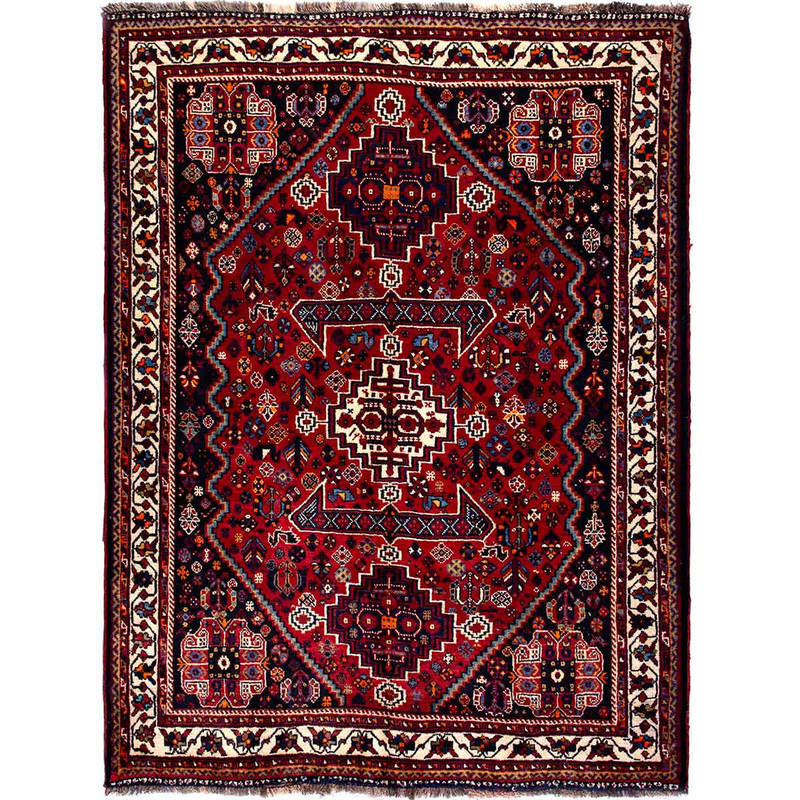
A small Qashqai rug in madder red, crimson, and navy blue - Qashqai Persian Rug 6x5 ft - Geometric Semi Antique Wool Hand Knotted
What You Need
•
A mild, pH-neutral wool detergent - products made for wool or rugs work best. Avoid alkaline laundry detergents.
•
A soft brush - with natural or soft synthetic bristles, not a stiff scrubbing brush.
•
Two buckets - one for washing solution and one for clean rinse water.
•
A rubber squeegee - to push water out of the rug.
•
Clean towels and a garden hose with gentle water pressure.
The Process
•
Vacuum thoroughly - vacuum both sides of the rug first to remove as much dry dirt as possible. Washing a dusty rug turns dust into mud.
•
Lay the rug flat - place it face up on a clean, smooth surface.
•
Wet the rug evenly - use cool to lukewarm water with gentle pressure. Do not blast the rug with a pressure washer.
•
Apply the solution - mix a small amount of wool detergent in lukewarm water as directed on the product. Using a soft brush, work the solution gently into the pile in the direction of the nap. Do not scrub hard.
•
Clean the fringe gently - use a little solution and a soft brush, working away from the body of the rug, then rinse.
•
Rinse thoroughly - rinse with clean, cool water until the water runs clear and no soap remains. Soap residue attracts dirt and leaves the pile sticky.
•
Remove water - push water out with a squeegee, working in the direction of the pile, repeating several times. Then roll the rug in clean towels and press to absorb more moisture.
7
Drying - The Most Important Step
More rugs are damaged by poor drying than by washing itself. A rug that stays wet for too long can develop mildew, odors, dye bleeding, or even rot in the foundation. Follow these guidelines:
•
Dry flat - lay the rug flat in a shaded, airy place. Hanging a wet rug can stretch and distort it.
•
Avoid direct, harsh sun - strong sun can fade colors. Gentle shade with good airflow is ideal.
•
Turn the rug - once the top feels dry, turn the rug over so the back can dry completely.
•
Check the foundation - the rug is dry only when the back and the base of the knots are completely dry, which can take a day or more.
•
Groom the pile - once dry, brush the pile gently in its natural direction and comb the fringe straight.
Never put a rug back on the floor until it is completely dry, and never use a high-heat dryer or a heater directly on the rug.
8
Fringes and Edges
The fringe and sides of a rug take more wear than any other part. The fringe is the end of the warp threads that run through the whole rug, so damage to it can eventually loosen the knots at the ends. Keep the fringe clean by brushing it gently and washing it carefully with a little wool detergent and a soft brush, working away from the rug. Never pull loose threads or let the vacuum catch the fringe. Check the side cords (overcasting) twice a year; if they begin to wear or unravel, have them rebound before the damage spreads to the knots.
9
Rugs in Kitchens, Pet Homes, and Family Rooms
Persian rugs are surprisingly well suited to busy homes. Wool naturally resists stains and recovers from pressure, and the rich patterns of village and tribal rugs hide everyday marks well. In a kitchen or dining area, choose a sturdy, low-to-medium pile rug, place a protective pad underneath, and keep a few clean white cloths handy for quick blotting. In homes with pets, trim claws regularly, discourage scratching and chewing, and deal with accidents immediately. For family rooms, a durable Heriz or Bijar is an excellent choice.
10
Protecting Rugs From Moths and Insects
Clothes moths and carpet beetles feed on wool, especially in dark, undisturbed areas and in dirty rugs. Signs of trouble include small bare patches, loose tufts, tiny larvae, or webbing on the back of the rug. To prevent damage:
•
Vacuum regularly, including under furniture and the back of the rug.
•
Rotate and move rugs so no area stays undisturbed for long.
•
Let in light and air - moths prefer dark, still conditions.
•
Act quickly - if you see signs of moths, have the rug professionally cleaned and treated.
11
Storing a Rug Safely
If you need to store a rug, clean it first, because dirt and food residues attract insects. Roll it with the pile facing outward, never fold it, wrap it in breathable cotton fabric or acid-free paper rather than plastic, and store it flat in a cool, dry, well-ventilated place off the floor. Check it every few months. Plastic wrapping traps moisture and can cause mildew.
12
What Not to Do
•
Do not machine wash a Persian rug or put it in a dryer.
•
Do not steam clean or use hot-water extraction machines designed for wall-to-wall carpet. Heat and harsh chemicals can damage wool and dyes.
•
Do not use bleach, ammonia, or strong alkaline detergents.
•
Do not soak a rug for long periods or leave it wet.
•
Do not cut loose threads or protruding knots. Trim nothing; ask a professional to secure them.
•
Do not pull on the fringe or beat the rug violently.
13
Silk, Antique, and Delicate Rugs
Silk rugs, antique rugs, and rugs with fragile areas, old repairs, or weak foundations should never be washed at home. Silk is easily damaged by water, rubbing, and detergents, and loses its luster if handled incorrectly. Antique rugs may have dyes that have become unstable or fibers weakened by age. For these, routine care at home should be limited to gentle vacuuming without a beater bar and blotting spills; all cleaning should be done by an experienced specialist. Our article on Persian silk rugs and our guide to maintaining antique rug fringes offer more guidance.
14
When to Call a Professional
Home care is excellent for routine maintenance, but some situations always require a professional:
•
Colors run in the colorfast test.
•
The rug is antique, silk, very large, or fragile.
•
There is pet urine that has soaked in, a strong odor, or old stains.
•
There are signs of moths, mildew, or rot.
•
There is damage such as holes, worn areas, loose sides, or damaged fringes that need repair.
Our guide to professional rug washing explains what a specialist does and how to choose one.
15
A Simple Care Calendar
•
Every week - vacuum high-traffic rugs; blot spills immediately.
•
Every month - vacuum lower-traffic rugs; check for signs of moths under furniture.
•
Every six months - rotate the rug; vacuum the back; check fringes and sides.
•
Every two to five years - full professional wash, or a careful home wash for small, sturdy, colorfast rugs.
16
Frequently Asked Questions
Can I use vinegar to clean my Persian rug?
A small amount of white vinegar in cool water can help with some odors and rinsing, but always test it first on a hidden area. Never use it on silk.
Can I use a carpet cleaning machine?
It is not recommended. Most machines use hot water, strong detergents, and powerful suction designed for synthetic carpets, which can damage wool and natural dyes.
How long does a washed rug take to dry?
Usually one to two days in good conditions, but always check that the back and the base of the knots are completely dry.
Should I clean both sides of the rug?
Vacuum both sides regularly. When washing, clean the face, rinse well, and make sure the back dries completely.
My new rug is shedding. Is that normal?
Yes. Some light shedding is normal in new wool rugs and decreases with regular, gentle vacuuming.
17
A Lifetime of Beauty
With simple, regular care, a Persian rug will reward you with decades of beauty and comfort. Prevention, gentle cleaning, and knowing when to call a specialist are all it takes to protect an object that may well outlive us all and be enjoyed by the next generation. For the story of how every rug is washed when it is first made, see our article on washing a new Persian rug after weaving.
At Los Angeles Home of Rugs, every rug comes with a Certificate of Authenticity and our care instructions. If you have a question about caring for a particular rug, please ask our experts.
Care and Resources
Care Instructions
Professional Washing
Washing After Weaving
Wool Rugs
Runners
Persian Rug FAQ