


Professional Persian Rug Cleaning: The Process Explained
Los Angeles Home of Rugs on Nov 17th 2026
Even with the best care at home, every Persian rug eventually needs a deep clean that only a specialist can provide. Years of foot traffic drive fine grit deep into the pile, spills leave traces, and colors gradually dull under a film of dirt. A good professional wash removes all of this, restores the rug's luster and color, and protects its fibers for many years to come. A bad wash, on the other hand, can cause colors to run, fibers to weaken, and foundations to shrink or rot.
Some people hesitate to wash an old rug, worrying that cleaning will remove its character. In fact, the opposite is usually true. Age gives a rug its gentle patina - the soft, mellow colors that come from decades of light and use - but dirt simply hides that patina under a gray layer. Cleaning a rug is like cleaning an old painting: it does not erase its age, it reveals it. This guide explains what happens during a proper professional cleaning, the specialist services available, how to choose a cleaner, and what to expect. For routine care, see our companion guide to cleaning a Persian rug at home.
1
Why Professional Cleaning Is Different
Hand-knotted Persian rugs are very different from wall-to-wall carpet. They are made from natural fibers - wool, cotton, and silk - colored with natural or high-quality dyes, and built with a foundation of warps and wefts that can shrink or distort if handled carelessly. General carpet cleaners usually use hot-water extraction machines, strong detergents, and high-pressure equipment designed for synthetic carpet fibers. On a Persian rug, these methods can cause:
•
Color bleeding - heat and alkaline chemicals can loosen dyes, causing reds and blues to run into lighter areas.
•
Fiber damage - harsh detergents strip the natural lanolin from wool, leaving it dry, brittle, and dull.
•
Shrinkage and distortion - uneven wetting and drying can shrink cotton foundations and make rugs ripple or lose shape.
•
Residue - surface cleaning leaves detergent and dirt deep in the pile, which attracts new dirt quickly.
•
Hidden moisture - water trapped in the foundation can lead to mildew and rot.
A specialist rug cleaner, by contrast, treats each rug as a textile, using methods adapted to its fibers, dyes, age, and condition.
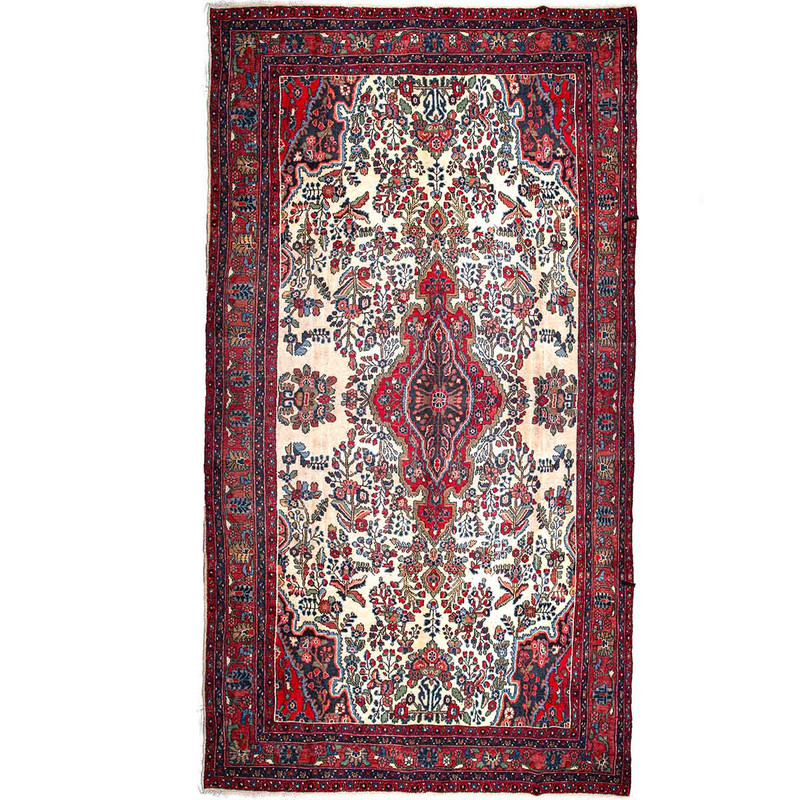
A large Hamadan rug - oversized pieces like this are best washed by specialists - Hamadan Persian Rug 16x8 ft - Afshan Semi Antique Wool Hand Knotted
2
A Craft With Deep Roots
Professional rug washing is not a modern invention. In Persia, carpet washing has long been a specialized trade, practiced by families of washers known as qalishuy in the great weaving cities. Every new rug is washed after it comes off the loom, as we describe in our article on washing a new Persian rug after weaving, and the same washers also cleaned rugs that had been used for years in homes, mosques, and palaces. Their methods - cool water, gentle soap, thorough rinsing, and careful drying - are the foundation of modern specialist rug cleaning.
Today's best rug cleaners combine this traditional knowledge with modern equipment such as dusting machines, centrifuges, and climate-controlled drying rooms. The equipment makes the work faster and more consistent, but the principles remain exactly the same: understand the rug, protect its colors and fibers, clean it through its whole depth, and dry it quickly and evenly.
3
Step 1 - Inspection and Documentation
A good cleaning begins with a careful inspection. The specialist examines the rug front and back, noting its origin, materials, age, and construction, and documents any existing problems: worn areas, holes, moth damage, stains, previous repairs, painted areas, weak fringes, damaged sides, and any signs of dry rot in the foundation. Many cleaners photograph the rug and discuss their findings with you before starting.
This inspection is important for two reasons. First, it determines the right cleaning method for your rug. Second, it ensures that you and the cleaner agree on the rug's condition before work begins, so there are no surprises later.
4
Step 2 - The Colorfast Test
Before any water touches the rug, the cleaner tests every color for stability. A damp white cloth, sometimes with a small amount of cleaning solution, is pressed against each color - especially reds, dark blues, and any bright or unusual colors - to see whether any dye transfers. If a color is unstable, the cleaner adjusts the method: using cold water, a special dye-fixing rinse, faster drying, or, in some cases, a different cleaning technique altogether. Our article on mordants explains why most natural dyes are stable and why some are not.
5
Step 3 - Dusting
The most important part of cleaning a rug happens before washing. A Persian rug in an ordinary home can hold a surprising amount of fine, sandy grit - in some cases, several pounds in a large rug - deep in the pile, where vacuuming cannot reach. If the rug were washed without removing this grit first, it would turn into mud inside the pile.
Specialist cleaners remove this dry soil by "dusting." Traditionally this was done by hanging rugs and beating them by hand; today most specialists use dusting machines that gently vibrate or beat the back of the rug, shaking the grit loose so that it falls out. Some also use compressed air. Thorough dusting alone often makes a dramatic difference to a rug's appearance.
6
Step 4 - Washing
Immersion Washing
The best method for most wool Persian rugs is a full immersion wash, sometimes called a "bath." The rug is laid flat on a clean washing floor or in a shallow pool and thoroughly wetted with cool to lukewarm water. A mild, pH-balanced wool detergent is worked through the pile with soft brushes or gentle mechanical brushing, in the direction of the nap. This cleans the rug through its whole depth, not just the surface.
Gentle on the Fibers
Throughout the wash, the cleaner monitors the colors and the condition of the rug. Fragile areas are supported and treated by hand. The fringes are cleaned carefully, often by hand, because cotton fringes can absorb dirt and dye easily.
Rinsing
The rug is rinsed repeatedly with clean water until all soap and dirt are removed. Thorough rinsing is essential; detergent left in the pile attracts dirt and leaves wool feeling stiff. Many specialists finish with a mildly acidic rinse, which helps set the dyes and restore the natural pH of wool.
7
Step 5 - Removing Water and Drying
After washing, the cleaner removes as much water as possible, often with a centrifuge (a large spinning machine designed for rugs) or with rollers and squeegees. This removes most of the water quickly and evenly, which reduces the risk of color bleeding.
The rug is then dried in a controlled environment - usually a drying room with warm, circulating, dehumidified air - or hung or laid flat in a well-ventilated space. The goal is to dry the rug completely, including the foundation and the base of the knots, as quickly and evenly as possible. Specialists check the moisture level carefully before the rug leaves the drying room.
Ask your cleaner how they dry rugs. Fast, even, controlled drying is one of the clearest signs of a professional rug cleaner, and one of the main reasons home or general carpet cleaning can go wrong.
8
Step 6 - Grooming and Finishing
Once dry, the rug is groomed: the pile is brushed in its natural direction, the fringes are combed straight, and the rug is inspected again. If the rug has become slightly distorted, it may be "blocked" - stretched gently on a frame or floor while damp and allowed to dry in the correct shape - to restore straight sides and square corners. Some rugs benefit from light hand polishing to even the surface, a craft described in our article on hand polishing and rug shaving.
9
Specialist Treatments
Pet Urine and Odor Removal
Pet urine is one of the most common reasons rugs come in for professional cleaning. Urine is alkaline when it dries, and over time it can damage wool, weaken the foundation, and cause dyes to shift or run. Surface cleaning rarely removes it, because it soaks deep into the foundation. Specialists use a full immersion wash combined with targeted treatments to neutralize and flush out the urine and its odor, and may use ultraviolet light to locate hidden spots before cleaning.
Moth Damage and Insect Treatment
Rugs with signs of moths or carpet beetles need cleaning to remove eggs and larvae, followed by appropriate treatment to prevent reinfestation. Damaged areas can then be repaired.
Color Run Correction
If a rug has suffered color bleeding - from a previous bad wash, a flood, or a spill - specialists can often reduce or remove the bleeding with careful chemical treatments. Results depend on the dyes, the fibers, and how long the problem has been there, so it is always best to bring such rugs in promptly.
Stain Removal
Specialists have a range of treatments for specific stains, such as coffee, wine, rust, ink, and wax, chosen to suit the fibers and dyes of each rug. Some old stains cannot be fully removed, but they can usually be greatly reduced.
Mildew and Flood Damage
A rug that has been soaked in a flood or left damp needs urgent attention. The water must be removed and the rug dried properly before mildew and rot set in. If your rug gets wet, take it to a specialist as soon as possible.
10
Repair and Restoration Services
Many professional rug cleaners also offer, or work with, skilled restorers. Common repairs include:
•
Overcasting and binding - rewrapping worn side cords to protect the edges.
•
Fringe repair and replacement - securing loose fringe knots, or re-knotting and finishing ends to prevent the rug from unraveling.
•
Reweaving and reknotting - rebuilding holes and worn areas by reweaving the foundation and tying new knots with matching wool, in the original design.
•
Patching - inserting a section from a similar rug, a quicker but less invisible method.
•
Moth damage repair - reknotting areas where moths have eaten the pile.
•
Dry rot treatment - reinforcing or replacing sections of foundation weakened by moisture.
For a valuable or antique rug, choose a restorer who works by hand in the traditional way and who can match the original wool, dyes, and knot type. Our article on the conservation of the Ardabil carpet shows how carefully the most important rugs in the world are conserved.
11
Silk and Antique Rugs
Silk rugs and antique rugs need extra care. Silk is strong when dry but weaker when wet, and it can lose its luster, develop water marks, or suffer from color bleeding if washed incorrectly. Antique rugs may have weakened fibers, fragile foundations, unstable dyes, or old repairs. Both should be cleaned only by specialists experienced with fine and antique textiles, using gentle, carefully controlled methods - sometimes cleaning a rug section by section rather than all at once. Our article on Persian silk rugs explains why silk needs this special treatment.
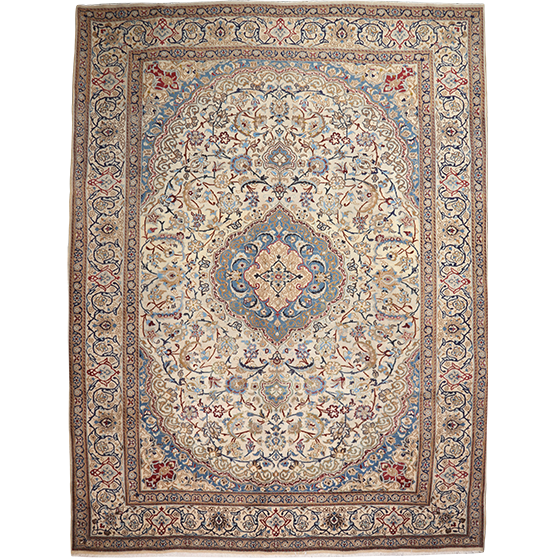
A wool and silk Nain in cream, navy blue, and gold - Nain Persian Rug 12x9 ft - Medallion Semi Antique Wool Silk Hand Knotted
12
How to Choose a Professional Rug Cleaner
Not every carpet cleaner is a rug specialist. Ask these questions before entrusting your rug to anyone:
•
Do you specialize in hand-knotted and Oriental rugs? - look for a business that cleans rugs in its own facility, not just wall-to-wall carpet in homes.
•
How do you clean rugs? - the answer should include dusting, immersion washing with wool-safe products, and thorough rinsing.
•
Do you test colors before washing? - every color, every time.
•
How do you dry rugs? - look for controlled, fast, even drying.
•
Do you inspect and document the rug before cleaning? - a written condition report protects both of you.
•
Do you offer repairs, and who does them? - skilled hand repair is a sign of a serious rug specialist.
•
Are you insured? - your rug should be covered while in their care.
Recommendations from rug dealers, interior designers, museums, and auction houses can help you find an experienced specialist in your area.
13
What Professional Cleaning Costs
Prices vary by region, size, and the work required. Most specialists charge by the square foot, with additional charges for urine treatment, stain removal, moth treatment, silk or antique rugs, and repairs. Cleaning a fine rug properly takes several days, including drying time. While professional cleaning costs more than general carpet cleaning, it protects a rug that may be worth many times the cleaning fee - and that, with proper care, can last for generations.
14
Caring for a Rug After Professional Cleaning
A freshly cleaned rug is at its best, and a few simple habits will keep it that way for longer. Use a quality rug pad to reduce friction and wear. Vacuum regularly with suction only, especially in the first weeks, when any remaining loose fibers work their way out. Rotate the rug once or twice a year so it wears and ages evenly, and keep it away from strong, direct sunlight where possible. Blot spills immediately with cool water and a clean white cloth, and avoid strong household cleaners.
It also helps to keep a simple record of your rug's care: when it was last cleaned, by whom, and any repairs made. For valuable rugs, keep your cleaner's condition reports and your purchase documents, such as a certificate of authenticity, together. This history is useful for insurance, for future cleaning, and if you ever decide to pass the rug on or sell it.
15
How Often Should a Rug Be Professionally Cleaned?
•
High-traffic rugs - entryways, hallways, and family rooms: every one to three years.
•
Moderate-traffic rugs - living and dining rooms: every three to five years.
•
Low-traffic rugs - bedrooms and formal rooms: every five years or as needed.
•
Rugs with pets or children - more frequently, and promptly after accidents.
Between professional cleanings, regular vacuuming, prompt attention to spills, and rotation will keep your rug in good condition. Our guide to cleaning a Persian rug at home explains this routine.
16
What to Expect When You Send a Rug for Cleaning
If you have never had a rug professionally cleaned, the process is usually straightforward:
•
Estimate - the cleaner measures the rug, inspects it, and gives you a written estimate, explaining any special treatments or repairs they recommend.
•
Condition report - existing wear, stains, and damage are documented, often with photographs.
•
Cleaning and drying - the rug is dusted, washed, rinsed, and dried over several days.
•
Final inspection - the cleaner checks the rug once more and grooms the pile and fringe.
•
Return - the rug comes back rolled, often wrapped in paper or breathable fabric. Many specialists offer pickup and delivery.
When your rug returns, place it on a good rug pad, vacuum gently after a day or two to lift the pile, and enjoy its renewed colors. A light, fresh smell is normal; any musty or damp smell should be reported to the cleaner, as it can mean the rug was not dried completely.
17
Common Myths About Rug Cleaning
"Washing a rug makes it wear out faster."
The opposite is true. Grit trapped in the pile acts like sandpaper on the fibers with every step. Removing it through proper washing slows wear considerably.
"Old rugs should never be washed."
Old rugs benefit from cleaning as much as new ones, as long as the cleaner is experienced with antique textiles and uses gentle methods suited to the rug's condition.
"Any carpet cleaner can clean an Oriental rug."
Hand-knotted rugs need specialist knowledge of natural fibers, dyes, and construction. General carpet cleaning methods can cause serious damage.
"Dry cleaning is the safest option."
So-called dry cleaning methods mainly clean the surface and can leave chemical residues. For most wool rugs, a careful immersion wash is both safer and more effective.
18
Frequently Asked Questions
Will washing remove the antique look of my rug?
No. Proper washing removes dirt, not patina. Most rugs look richer and more vibrant after a professional wash, with their natural aging still intact.
Can a professional fix colors that have already run?
Often, yes, especially if the problem is treated quickly. Some old or severe bleeding can only be reduced.
Is steam cleaning safe for Persian rugs?
It is not recommended. Heat and moisture driven into the foundation can damage wool, loosen dyes, and leave the rug damp.
How long does professional cleaning take?
Usually several days to a week or two, depending on the size of the rug, the treatments needed, and drying time.
Can I walk on my rug right after it comes back?
Yes. A professionally cleaned rug is returned completely dry and ready to use. Place it on its pad, and it can go straight back into daily life.
Do professional cleaners also repair fringes?
Many do, or they work with skilled restorers. Securing worn fringes early prevents the ends of the rug from unraveling.
Should I clean a rug before storing it?
Yes. Dirt and food residues attract moths, so always clean a rug before storing it, then roll it with the pile outward and wrap it in breathable fabric.
19
Protecting Your Investment
A Persian rug is a work of art and an investment that, with proper care, will last for generations. Professional cleaning by a qualified specialist is one of the best ways to protect it, preserving its colors, fibers, and structure so that it continues to bring beauty to your home for decades.
At Los Angeles Home of Rugs, every rug is professionally washed before it reaches you and comes with a Certificate of Authenticity and our care instructions. If you have questions about caring for your rug, please ask our experts.
Care and Resources
Care Instructions
Cleaning at Home
Washing After Weaving
Silk Rugs
Antique Rugs
Persian Rug FAQ