


Ecru is a word borrowed from French, where it means raw or unbleached. It describes the natural color of linen, cotton, silk, and wool before any bleach or dye has touched them: a pale, quiet neutral, warmer than gray and cooler than cream. In a Persian rug, ecru is the color of restraint. The design is still there, often a full medallion with corners, but it is drawn in tones so close that the rug reads first as texture and light, and only then as pattern.
This guide explains what we mean by ecru, where the color comes from in a hand-knotted rug, how it differs from the other light neutrals in our catalog, which rugs carry it, and how to live with and care for a pale, softly aged rug. For the full palette, see our guide to Persian rug colors, and for the warmer light tones, our guides to beige and cream rugs.
1
What We Mean by Ecru
In our catalog, ecru is a pale, natural neutral with a slightly cool, grayish or greenish cast, like unbleached linen. A rug is listed as ecru when this tone is one of its main colors, usually in the field. Ecru sits close to several neighbors. It is less yellow than cream, less white than ivory, lighter than beige and sand, and warmer than stone. Many ecru rugs also belong to one or more of these groups, because a pale field changes with the light.
Ecru is the pale tone of unbleached linen or raw wool. In Persian rugs it comes mainly from undyed wool and from light fields that have softened with age, light, and washing.
2
Where Ecru Comes From
•
Undyed wool - Natural fleece is rarely pure white. Many fleeces have a pale, slightly gray or green natural tone that reads as ecru.
•
Softened light fields - Ivory and cream fields that have aged for decades often cool and mellow into ecru.
•
Faded accents - When the blues, greens, and roses of a light rug soften, the whole rug drifts toward a pale, harmonious neutral.
•
Washing - Gentle washes over many years, and in some cases a deliberate light wash, soften strong contrasts into muted tones.
Our article on Persian rug wool explains the natural colors of fleece, and our articles on washing after weaving and professional washing explain how washing changes color.
3
The Beauty of a Softly Aged Rug
Most rugs in our ecru group were not woven in ecru. They began as light Tabriz rugs with ivory or cream fields and medallions in blue, rose, sage, and camel. Over decades of daylight, use, and washing, the tips of the pile softened, the colors drew closer together, and the whole rug settled into a pale, unified tone. If you part the pile, you can often see stronger colors hidden near the knots. This kind of gentle aging is admired by many designers, because it gives a rug the quiet, weathered look of old linen or limestone, something no new rug can imitate.
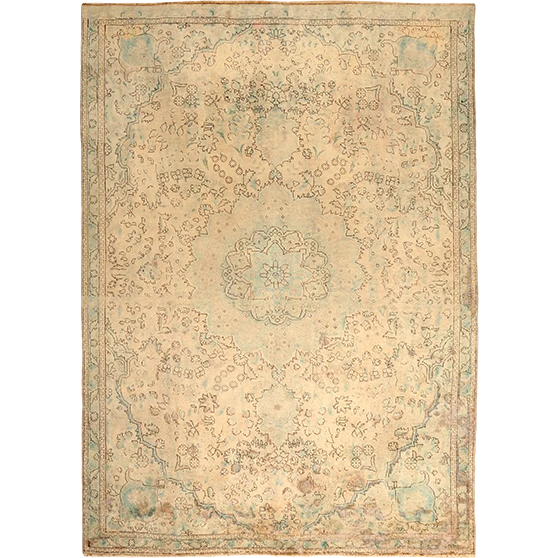
A Tabriz rug of about 10.5 by 7.25 feet with a soft sage medallion and corners on a pale ecru field - Tabriz Persian Rug 10x7 ft - Medallion Semi Antique Wool Silk Hand Knotted
4
Ecru and the Muted Look
In recent years, muted and softly faded Persian rugs have become some of the most requested rugs among designers. They bring the depth and craft of a hand-knotted rug into rooms built around white walls, pale wood, linen, and natural stone, without introducing strong color. Ecru rugs are at the heart of this look. They sit quietly under modern furniture, and their faint medallions and borders add just enough pattern to keep a calm room from feeling empty.
5
Natural Fading and Chemical Washing
It is worth knowing the difference between natural softening and harsh treatment. Natural softening comes from years of light and gentle washing, and it leaves the wool supple and healthy. In some markets, rugs have also been given strong chemical washes or bleaching to make them look old or pale quickly. A harsh bleach can make wool dry, brittle, and fragile. When we offer a pale rug, we check the feel and strength of the pile, and we describe its condition honestly. A healthy ecru rug feels soft and resilient in the hand.
6
Ecru, Ivory, Cream, Beige, and Stone
Light neutrals are the hardest colors to tell apart. These short descriptions help:
•
Ivory - The lightest warm white, close to natural white wool.
•
Cream - Ivory with a soft, buttery warmth.
•
Ecru - A pale, unbleached tone with a faint gray or green cast.
•
Beige - Darker and sandier.
•
Stone - A cooler gray-beige.
•
Taupe - A gray-brown neutral.
In photographs, ecru often looks slightly cooler than cream and slightly warmer than stone. Compare the rug with something white, and look at every photograph in the listing.
7
Tabriz Rugs in Our Ecru Group
Nearly all of our ecru rugs are semi-antique Tabriz rugs. Tabriz, the great weaving city of northwestern Persia, produced many light-ground rugs in the twentieth century, often with silk highlights and fine outlines. These features help explain why Tabriz rugs age so gracefully into pale tones: the fine outlines keep the design legible even when the colors draw together. Our Tabriz rug guide explains the city's grades and eras.
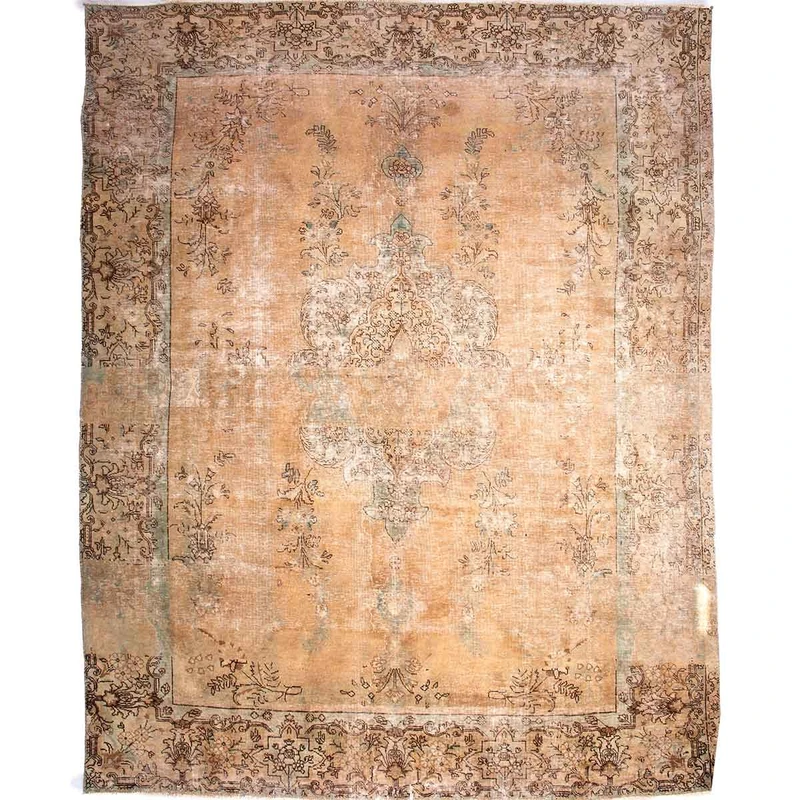
A Tabriz rug of about 12 by 8.75 feet with a softly faded medallion design in pale ecru, apricot, and walnut brown - Tabriz Persian Rug 12x8 ft - Medallion Semi Antique Wool Silk Hand Knotted
8
Designs in Ecru Rugs
•
Medallion - A faint medallion and corners give a pale rug a gentle center.
•
Afshan - Scattered flowers become a soft texture in ecru.
•
Shah Abbasi - Palmettes in muted tones read like a relief carving.
•
Vase - Flowering vases in pale tones suit a garden-like room.
In a pale rug, the outlines carry the design. Look for dark or medium outlines if you want the pattern to remain visible from across the room; choose softer outlines if you want the rug to read almost as a plain texture.
9
Ecru Rugs in Living Rooms
An ecru rug is a quiet, flexible base for a living room. It works with white and warm gray walls, with pale oak and ash floors, and with linen, bouclé, and natural textiles. In a large living room, a room-size ecru rug of 9 by 12 feet or larger reaches under the front legs of every seat and unifies the room without adding strong color. Our 9x12 rug guide explains how to size it.
10
Ecru Rugs in Bedrooms
Bedrooms are ideal for ecru rugs. Their calm, pale tone suits rest, and bedrooms see little traffic, so a light rug stays clean longer. An ecru rug under a bed with white or oatmeal linen creates a soft, layered look. For sizes, see our 8x11 and 9x12 guides.
11
Ecru Rugs in Minimal and Scandinavian Rooms
Ecru belongs naturally in minimal and Scandinavian interiors. It echoes pale wood, white walls, and natural textiles, and its faint pattern adds warmth and history to spaces that might otherwise feel cool. A single ecru Persian rug can be the one handmade, timeworn element that gives a modern room its character.
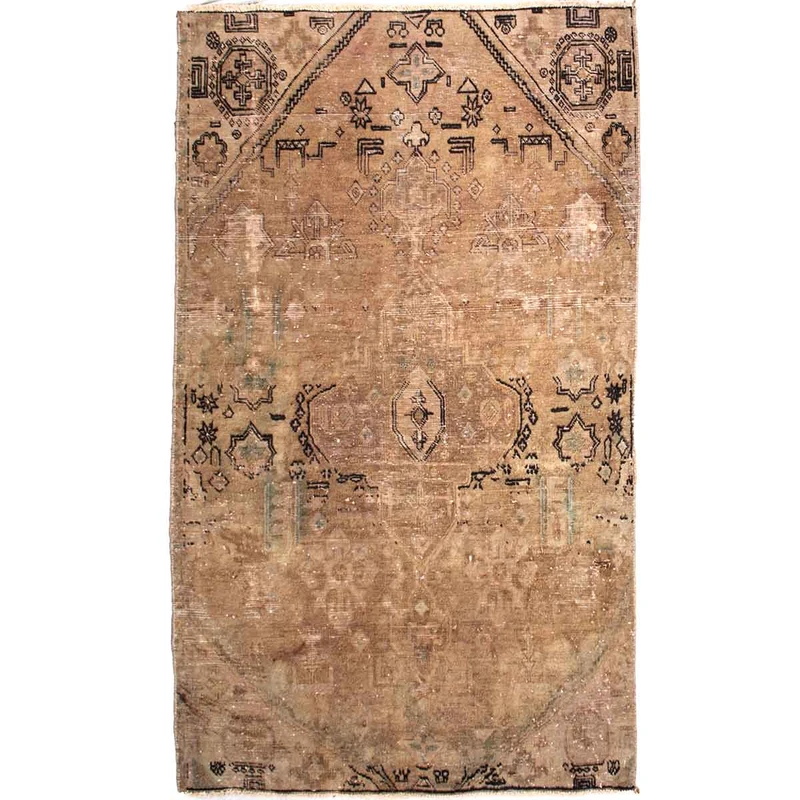
A Tabriz rug of about 7.5 by 4.25 feet with a softly worn design in pale ecru and walnut brown - Tabriz Persian Rug 7x4 ft - Medallion Semi Antique Wool Silk Hand Knotted
12
Ecru and Light
Pale rugs change with light more than any others. In cool north light, ecru looks grayish, close to stone. In warm afternoon light and under warm bulbs, it turns soft and golden, closer to cream or sand. In a bright room, an ecru rug reflects light and makes the space feel larger. Think about when you use the room most, and look at the photographs that match that light.
13
Ecru Rugs and Sunlight
A pale rug shows fading less than a dark one, because its colors are already soft. Still, strong direct sun weakens all natural fibers over time. Rotate the rug every six to twelve months, and use sheer curtains or UV-filtering film on windows that get many hours of direct sun. Rugs with silk highlights need the most protection.
14
Pairing Colors with an Ecru Rug
•
White and oatmeal - Linen, bouclé, and white walls for a calm, tonal room.
•
Sage and olive - Soft greens echo the faded sage of many ecru rugs.
•
Pale oak and ash - Light woods suit the quiet tone of ecru.
•
Stone and plaster - Natural materials share ecru's weathered character.
•
Black accents - A black lamp or frame adds definition.
•
Terracotta - A few warm clay tones keep the room from feeling cold.
15
Ecru Rugs and Everyday Life
Ecru is a light color, so it shows dark dirt and mud sooner than red or navy. Wool resists stains better than many people expect, and a softly patterned ecru rug hides small marks better than a plain field. Place an ecru rug in a living room, bedroom, or study rather than a busy entry, vacuum it regularly, and blot spills at once.
16
Ecru Rugs and Pets
An ecru rug hides light pet hair well but shows dark hair and muddy paws. If you have a dark-haired pet, consider a rug with darker accents. Vacuum regularly without the beater bar, blot accidents quickly, rinse with cold water, and blot again.
17
Older Ecru Rugs
All of our ecru rugs are semi-antique, and their pale tones are part of their age. When you look at an older pale rug, check the feel of the wool, the condition of the ends and sides, and any low or worn areas. Light, even wear is part of the charm of a softly aged rug; worn patches to the foundation need care. We describe each rug's condition in its listing, and our notes on semi-antique rugs and our Before You Buy page explain what to look for.
18
Why Our Ecru Group Is Small
Ecru depends on a particular combination of light wool, fine drawing, and gentle aging, so true ecru rugs are uncommon. Our ecru group holds only a handful of rugs at any time. If you love this look, also browse our cream, beige, sand, and stone groups, where you will find many more softly faded rugs in close tones.
19
How a Rug Ages Into Ecru
The journey from a colorful rug to an ecru one happens slowly, over decades. Light reaches the tips of the pile first. Reds made with madder soften toward rose and then toward a pinkish tan; blues made with indigo cool toward steel and slate; yellows and greens fade toward straw and khaki. Meanwhile, the light ground warms or cools slightly depending on the wool. Each wash during the rug's life gently lifts a little more surface color. After forty or sixty years, all these colors have moved toward one another, and the rug reads as a single pale tone with a design drawn in whispers. This is very different from a rug that was simply bleached, where colors disappear unevenly and the wool loses its strength.
20
Reading the Back of a Pale Rug
One of the best ways to understand an ecru rug is to look at its back. On the back, the knots are protected from light, so the original colors are often much stronger there. A rug that looks pale beige and sage from the front may show clear blue, rose, and cream on the back. This tells you that the soft front is the result of natural aging rather than a dye choice, and it shows you the rug's original palette. Ask us for a photograph of the back if you would like to see it.
21
Ecru and Silk Highlights
Many Tabriz rugs include silk in their outlines and small details. In a pale ecru rug, silk highlights catch the light as you walk past, so the faint design seems to appear and disappear. Silk is more sensitive to light than wool, and in older rugs it may have softened even more than the wool around it. Treat a silk-highlighted rug gently, and keep it out of long hours of direct sun. Our silk group lists rugs with silk content.
22
Ecru Rugs in Dining Rooms
A pale rug can look elegant under a dining table, especially a dark wood or stone table that contrasts with it. Because ecru shows marks, it suits formal dining rooms used for guests better than busy family kitchens. Choose a size that lets the chairs stay on the rug when pulled out, about 24 inches beyond the table on every side, and blot spills at once. Our size guide gives sizes for every table.
23
Layering with an Ecru Rug
An ecru rug layers beautifully over a larger jute or sisal rug, adding a soft, old pattern to a natural base. It can also sit on top of wall-to-wall carpet in a bedroom or study, as long as you use a pad that grips both surfaces. Because its colors are so quiet, an ecru rug rarely clashes with the materials beneath it.
24
Ecru as a Backdrop for Art
Designers often choose pale, muted rugs for rooms with strong art, sculpture, or statement furniture. An ecru rug gives these pieces a calm, textured ground and lets them take the lead. At the same time, its faint medallion and borders add a sense of history that a plain rug cannot. If your room already has bold pieces, an ecru Persian rug may be the most generous choice.
25
Small and Large Ecru Rugs
Our ecru group includes both room-size rugs for living rooms and smaller pieces for bedsides, entries, and studies. A small ecru rug is an easy way to bring a softly aged texture into a room without changing its whole palette. A room-size ecru rug changes the feeling of a space entirely, making it lighter and calmer. Our 4x6 rug guide and 10x13 rug guide describe where these sizes fit.
26
Seeing Ecru on a Screen
Pale neutrals are among the hardest colors to show on a screen. An ecru field can look white, gray, or yellow depending on your phone or monitor. Our photographs are taken in consistent light, but if the exact tone matters, compare several photographs of the same rug, and ask us for a description in daylight or a photograph next to a white sheet of paper.
27
Ecru Through the Seasons
An ecru rug changes character with small changes around it. In winter, with wool throws, warm lamps, and amber light, it looks warm and creamy. In summer, with white linen, green plants, and open windows, it looks cool and airy, like sun-bleached sand. This quiet adaptability is one reason designers return to pale rugs again and again: they never fight the room, and they look right in every season.
28
A Rug That Has Already Lived
Part of the appeal of an ecru rug is that it has already lived a long life. It has been walked on, washed, and sunlit for decades, and it carries that history in its soft colors and supple pile. Bringing such a rug into your home continues its story. Cared for well, it will keep softening gracefully for many more years.
When you choose an ecru rug, you are choosing patience as much as color: a beauty that took decades to form and that rewards a long, slow look.
29
Questions to Ask Before You Buy
•
Is the pale tone from age or from a harsh wash? - A healthy pale rug feels supple, not dry.
•
How visible is the design? - Decide whether you want a faint pattern or almost plain texture.
•
Are there worn areas? - Ask about low pile, ends, and sides.
•
How will my light change it? - Ecru shifts between gray and cream.
•
Does it include silk? - Silk highlights need more protection from sun.
30
Caring for an Ecru Rug
Vacuum regularly with suction only, or with the beater bar raised, and vacuum the back a few times a year. Rotate the rug every six to twelve months. Blot spills at once with a clean white cloth and cold water, and never rub. Avoid bleach and strong cleaners, which can leave yellow or white marks on pale wool. Have the rug washed every few years by a professional who cleans hand-knotted rugs, and tell them it is an older, softly faded piece. Our care instructions explain each step.
31
Frequently Asked Questions
What does ecru mean?
Ecru comes from the French word for raw or unbleached. It describes the pale natural tone of linen, cotton, silk, or wool before bleaching or dyeing.
Were ecru rugs woven in ecru?
Some used naturally pale wool, but many began as ivory or cream rugs and softened into ecru over decades of light, use, and washing.
Is a faded rug less valuable?
Not necessarily. Soft, even fading is often prized for its look. What matters most is the health of the wool and foundation.
What is the difference between ecru and cream?
Cream is warmer and slightly yellow; ecru is paler and slightly cooler, like unbleached linen.
Do ecru rugs suit modern rooms?
Very well. Ecru pairs naturally with white walls, pale wood, linen, and stone.
32
Choose Your Ecru Rug
An ecru Persian rug brings the quiet beauty of age and natural materials into your home. Browse our ecru rugs, compare them with our cream, beige, and stone groups, and ask our experts if you would like help choosing.