


Ask someone to picture a Persian rug, and they will usually imagine a multicolor rug: a red field, a navy border, ivory and gold flowers, a touch of green. This is the classic Persian palette, built over centuries from a handful of natural dyes combined with great skill. A multicolor rug is not one color with accents but a balanced harmony of several, each one supporting the others. It is the most traditional kind of Persian rug, and also one of the easiest to live with.
This guide explains what we mean by multicolor, how Persian dyers built a full palette from a few dyes, how to read the colors of a busy rug, which weaving traditions are most colorful, and how to choose, place, and care for a multicolor rug. For the full palette, see our guide to Persian rug colors, and for the two great colors at the heart of most multicolor rugs, our guides to blue and red rugs.
1
What We Mean by Multicolor
In our catalog, a rug is listed as multicolor when several strong colors are in balance and no single color dominates the overall impression. Many rugs in this group also appear under their main colors, such as red, blue, or ivory, because a multicolor rug usually has a field color and a border color. The multicolor label tells you that, from across the room, the rug reads as a rich mix rather than one color.
A multicolor Persian rug balances several strong colors, usually red, blue, ivory, green, and gold. It is the classic Persian palette and the most forgiving choice for a busy room.
2
Building a Palette from a Few Dyes
A traditional Persian dye house worked with a small number of sources, and combined them to make many colors:
•
Madder - Reds from pink and rose to brick, crimson, and deep wine.
•
Indigo - Blues from sky blue to navy, depending on the number of dips.
•
Yellow plants - Weld and other plants for yellows and golds.
•
Indigo with yellow - Greens from sage to emerald.
•
Indigo with madder - Purples, aubergine, and deep plum.
•
Madder with yellow - Oranges, coppers, and terracotta.
•
Tannins and natural wool - Browns, blacks, ivory, and camel.
With these combinations, a dyer could produce a dozen or more distinct colors for one rug. Our articles on natural dyes, the principal sources of natural colors, and the nine original ranges of Persian colors explain the palette in detail.
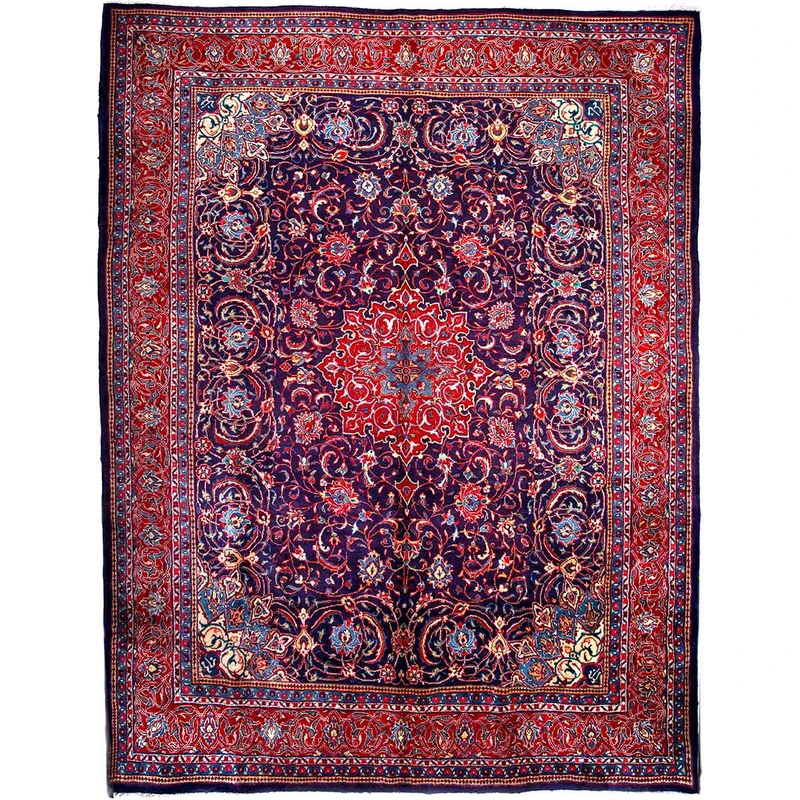
An Arak rug of about 14 by 9.75 feet with a red medallion on a deep navy-purple field covered with flowers, framed by a red border - Arak Persian Rug 13x9 ft - Medallion Semi Antique Wool Hand Knotted
3
How to Read a Multicolor Rug
A rug with many colors can look busy at first. It becomes easier to read when you look at it in layers:
•
The field - The background color of the central area, which sets the mood.
•
The medallion - The central motif, often in a contrasting color.
•
The border - The frame, often in the field's opposite color, such as navy around red.
•
The drawing colors - Dark outlines that hold the design together.
•
The accents - Small touches of green, gold, and rose that bring the rug to life.
Once you see the structure, a multicolor rug becomes a clear composition: a red field with a navy border, a blue medallion, ivory flowers, and gold and green accents. Describe a rug to yourself in this order, and you will find it much easier to match to your room.
4
Red and Blue: The Heart of the Palette
Most multicolor Persian rugs are built around madder red and indigo blue. These two great dyes have been used together for centuries, and they balance each other perfectly: red brings warmth, blue brings depth and calm. A red field with a navy border, or a navy field with a red border, is the backbone of countless multicolor rugs. Ivory, gold, and green are added for light and life.
5
Multicolor City Rugs
The great workshop rugs of the Arak region, Kashan, and Isfahan are some of the most refined multicolor rugs. In Arak, Mahal, and Sarouk rugs, rich red and navy fields carry flowers in ivory, blue, gold, and green. In Kashan and Najafabad rugs, a crimson field holds a blue and ivory medallion with a navy border. These rugs use many colors with great control, so they look rich rather than loud. Our Mahal rug guide and Najafabad rug guide describe them in detail.
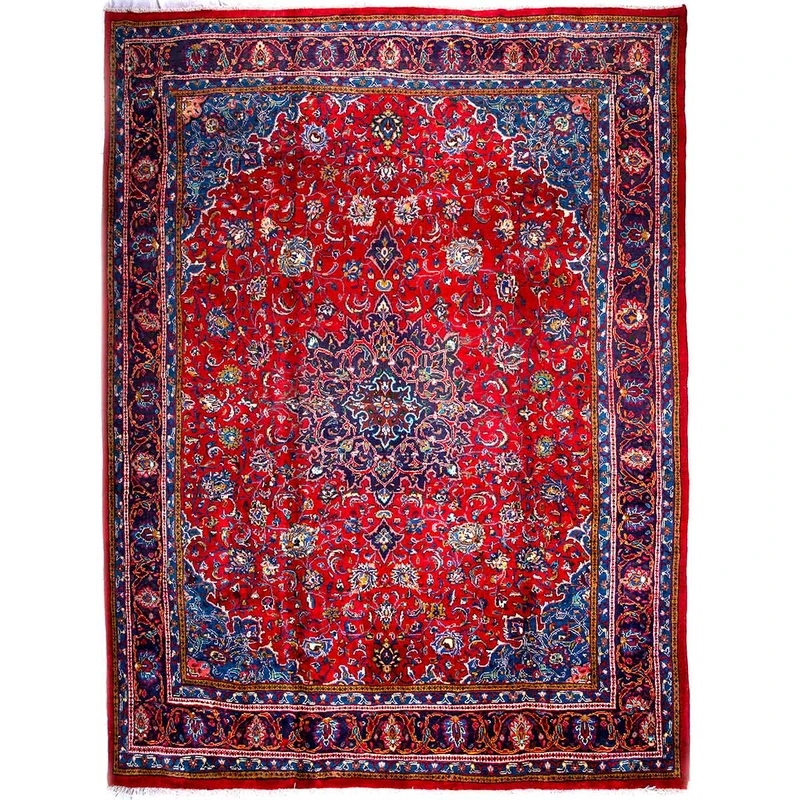
A Mahal rug of about 13.5 by 9.75 feet with a blue medallion and light blue corners on a red field filled with flowers - Mahal Persian Rug 13x9 ft - Medallion Semi Antique Wool Silk Hand Knotted
6
Multicolor Village Rugs
Village rugs from Heriz, Hamadan, and Bakhtiari country use bold blocks of color: brick red, navy, ivory, light blue, and touches of green and gold. Their colors are less refined than city rugs but more vigorous, and their large-scale designs read clearly across a room. Bakhtiari garden-panel rugs, in particular, can hold a dozen colors, each panel a small garden of its own. Our Bakhtiari rug guide and Heriz rug guide explain these traditions.
7
Multicolor Tribal Rugs
Tribal weavers of Fars, including the Qashqai and the groups whose rugs are sold as Shiraz, are known for joyful, saturated colors: madder red, indigo, ivory, orange, green, and gold, often in small, lively motifs. Qashqai and Shiraz rugs, with their birds, animals, and hooked medallions, are among the most colorful rugs in our collection. Our Qashqai rug guide and Shiraz rug guide describe them.
8
Garden Panels: Many Colors in Order
One of the most colorful designs in Persian weaving is the garden-panel design, called Kheshti, in which the field is divided into squares or rectangles, each holding a tree, flower, or vase. Each panel can have its own ground color, so the whole rug becomes a patchwork of red, navy, ivory, gold, and green, held together by a regular grid. Our Kheshti design guide explains this design.
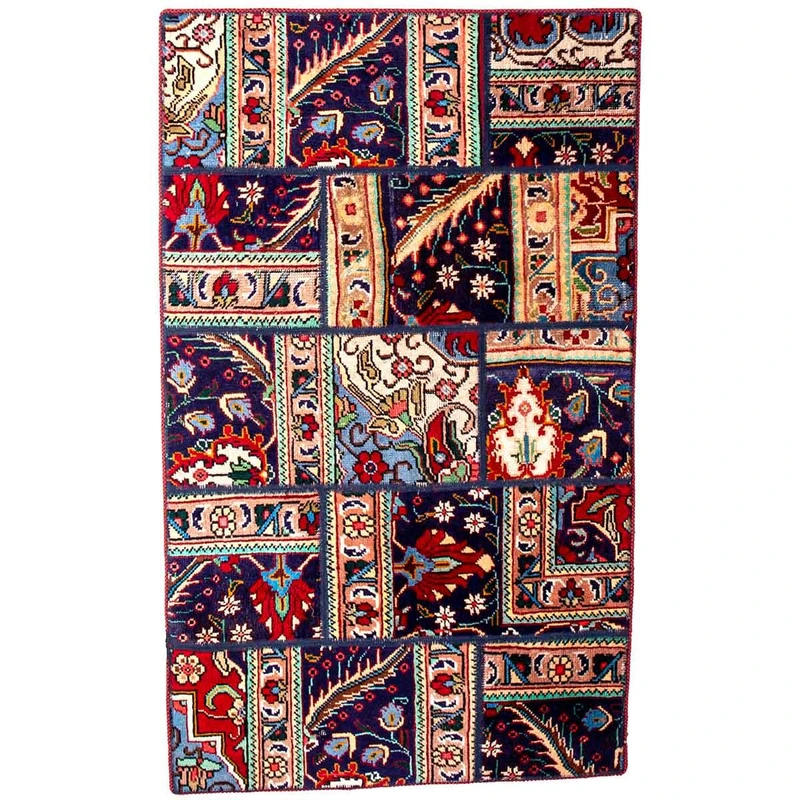
A Tabriz rug of about 5 by 3 feet with garden panels in navy, red, ivory, gold, and green - Tabriz Persian Rug 4x2 ft - Kheshti Semi Antique Wool Silk Hand Knotted
9
Why Multicolor Rugs Are So Forgiving
Multicolor rugs are the most practical rugs for busy homes. Their many colors and busy designs hide spills, crumbs, dust, and pet hair far better than plain or light rugs. A stain that would stand out on an ivory field can disappear into the pattern of a multicolor rug. They also hide the slight color differences of wear, so a multicolor rug looks good for decades even in a family room, dining room, or hallway.
10
Multicolor Rugs and Your Furniture
Because a multicolor rug contains many colors, it offers many ways to connect with a room. Pick one or two colors from the rug, perhaps the navy of the border and the gold of the flowers, and repeat them in pillows, throws, art, or upholstery. Keep large furniture in neutral tones, such as cream, gray, or natural wood, so the rug remains the star. This simple approach makes even a very colorful rug feel calm and intentional.
11
Multicolor Rugs in Living Rooms
A multicolor rug is a classic choice for a living room. It brings warmth and life to the center of the home and works with both traditional and modern furniture. In a room with neutral sofas and white walls, a multicolor rug provides all the color the room needs. In a room that already has strong colors, choose a rug whose palette includes them. Our size guide explains how to size a rug for a seating group.
12
Multicolor Rugs in Dining Rooms
Dining rooms are one of the best places for a multicolor rug, because spills and crumbs disappear into the pattern. A rich red and navy rug under a wood table creates a warm, welcoming room for long meals. Choose a size that lets the chairs stay on the rug when pulled out, about 24 inches beyond the table on every side.
13
Multicolor Rugs in Bedrooms
A multicolor rug brings warmth and personality to a bedroom. Pair it with white or neutral bedding so the rug's colors stand out, or pick up one of its colors in the bedding for a coordinated look. A small colorful tribal rug beside the bed is a cheerful way to start the day.
14
Multicolor Rugs in Hallways and Entries
Hallways and entries see the most traffic in a home, and multicolor rugs handle it best. A colorful runner hides the dust of shoes and brings life to a narrow space, and a small tribal rug at the front door welcomes guests with color. Our runner guide explains how to measure a hallway.
15
Multicolor Rugs in Modern Rooms
A multicolor Persian rug can be the single bold element in a modern room. Against white walls, concrete, and clean-lined furniture, its colors and pattern add warmth and history. Keep the rest of the room simple, and let the rug provide color. Many designers use a colorful vintage rug in exactly this way, as a work of art on the floor.
16
Pairing Colors with a Multicolor Rug
•
Neutral walls - White, cream, and warm gray let the rug lead.
•
Natural wood - Oak and walnut suit the warmth of red and gold.
•
One accent color from the rug - Repeat navy, gold, or green in pillows and art.
•
Brass and bronze - Warm metals echo the gold in many rugs.
•
Leather - Cognac and brown leather look rich with red and navy.
•
Plants - Greenery echoes the green accents and keeps the room fresh.
17
Multicolor and Light
Light changes which colors in a multicolor rug stand out. In warm afternoon light, reds and golds glow; in cool morning light, blues and greens come forward. In the evening under warm bulbs, the rug looks warmer and deeper. This shifting quality is part of the pleasure of living with a colorful rug: it never looks quite the same twice.
18
Multicolor Rugs and Sunlight
Strong direct sun softens all natural dyes over time, and in a multicolor rug, different colors soften at different speeds. Yellows and some reds may fade before indigo, changing the balance of the palette. Rotate the rug every six to twelve months and use sheer curtains or UV-filtering film on windows that get long hours of direct sun, so the colors age evenly.
19
Older Multicolor Rugs
Most of our multicolor rugs are semi-antique, about 40 to 60 years old. Age softens the contrast between colors and gives a multicolor rug a harmonious, mellow glow. When you look at an older rug, check whether all the colors have aged evenly, and ask about any areas of wear, repairs, or color runs. Our notes on semi-antique and antique rugs, and our Before You Buy page, explain what to look for.
20
Color Runs and Colorfastness
In a rug with many colors, it is worth asking about colorfastness. A color run happens when a dye bleeds into the colors next to it, often after a rug has been soaked or washed carelessly. Good natural and synthetic dyes are colorfast when properly fixed, and most older rugs that have been washed many times have already shown any weakness. We check our rugs for runs and describe any we find. If you clean a spill, use only a little cold water and blot quickly, so no color can travel.
21
Designs Often Seen in Multicolor
•
Medallion - A contrasting medallion at the heart of a colorful field.
•
Shah Abbasi - Palmettes and flowers in many colors.
•
Kheshti - Garden panels with their own ground colors.
•
Afshan - Scattered flowers in a full palette.
•
Geometric - Bold tribal motifs in saturated colors.
•
Tree of Life - Trees, birds, and flowers in lively colors.
22
The Dyer's Art of Balance
Making a successful multicolor rug is not only a matter of having many dyes. The dyer and designer must decide how much of each color to use and where to place it, so that no color overwhelms the others. In the best rugs, the strong colors are spread evenly across the field, small touches of a bright color are repeated in several places to tie the design together, and dark outlines separate neighboring colors so each stays clear. This balance is what makes a rug with ten or twelve colors look calm and composed instead of chaotic.
23
Purple and Plum Tones
Some multicolor rugs have fields that look navy in one light and plum or purple in another. These tones come from layering indigo over madder, or from a deep blue with a red undertone. Purple fields are less common than red or navy, and they give a rug a rich, jewel-like character. Our Arak rug above is a good example: in daylight its field reads as a deep navy with a purple cast, which makes its red medallion glow.
24
Gold and Yellow Accents
Gold and yellow are small in area but large in effect. A few golden flowers or a golden guard stripe can light up a whole rug, especially in the evening under warm lamps. In multicolor rugs, gold usually comes from weld and other yellow plants, sometimes deepened with a little madder. Our yellow and gold rugs include rugs where gold plays a larger part.
25
Orange and Copper Accents
Tribal rugs from Fars and some village rugs use orange, copper, and terracotta in their palettes, made by combining madder with yellow. These warm tones make a multicolor rug feel sunny and lively. They pair well with terracotta pots, warm woods, and rust-colored textiles. See our orange rugs for rugs where orange is stronger.
26
Small Multicolor Rugs
Small multicolor rugs are among the most charming pieces in our collection: tribal mats, bag faces, and small rugs full of birds, animals, and flowers. They are perfect for entries, bedsides, bathrooms, and walls, and they bring a lot of color to a small space. Our 2x3 rug guide and 1x2 rug guide describe where small rugs fit.
27
Multicolor Rugs and Children
For families with young children, a multicolor rug is the most practical choice. It hides spills, crayons, and crumbs, and its lively patterns invite play. Wool is durable and resists stains, so a well-made multicolor rug can handle years of family life and still look beautiful.
28
Seeing Many Colors on a Screen
Screens can shift the balance of a multicolor rug, making reds look orange or navy look purple. Our photographs are taken in consistent light, but if a particular color matters for your room, look at every photograph in the listing and ask us for a description in daylight.
29
A Rug That Grows with Your Room
One of the quiet advantages of a multicolor rug is that it adapts as your room changes. Repaint the walls, replace the sofa, or change the pillows, and the rug will usually have a color that connects with the new scheme. Many people keep the same multicolor rug through several homes and many redecorations, because it always has something to offer the room.
30
Multicolor Rugs as Art
A colorful Persian rug can also be enjoyed as art. On a wall, a small multicolor rug reads like a painting, full of color and story. Hang it with a sleeve or a strip sewn along the top edge, never with nails through the rug, and keep it out of direct sun so its colors stay bright for generations.
31
Questions to Ask Before You Buy
•
What is the field color? - It sets the overall mood of the rug.
•
Which colors match my room? - Pick one or two to repeat.
•
How busy is the room? - Multicolor rugs suit busy rooms best.
•
Have all colors aged evenly? - Look for a harmonious palette.
•
Are there any color runs? - Ask about colorfastness in older rugs.
32
Caring for a Multicolor Rug
Vacuum regularly with suction only, or with the beater bar raised. Rotate the rug every six to twelve months so all its colors age evenly. Blot spills at once with a clean white cloth and a little cold water, and never soak the rug or rub it. Avoid bleach and strong cleaners. Have it washed every few years by a professional who cleans hand-knotted rugs and checks colorfastness first. Our care instructions explain each step.
33
Frequently Asked Questions
What makes a rug multicolor?
Several strong colors in balance, with no single color dominating the overall impression.
Are most Persian rugs multicolor?
Yes. Traditional Persian rugs are built from a full palette of dyes, so most use many colors.
Do multicolor rugs hide dirt?
Very well. Their many colors and busy designs hide spills, dust, and pet hair better than any other rugs.
How do I match a multicolor rug to my room?
Keep large furniture neutral and repeat one or two of the rug's colors in pillows, art, or throws.
Why does my rug appear in several color groups?
Because we list each rug under all its main colors, and also under multicolor when no color dominates.
34
Choose Your Multicolor Rug
A multicolor Persian rug brings the full richness of Persian dyeing into your home, and it is the most forgiving rug you can choose. Browse our multicolor rugs, compare them with our red and blue groups, and ask our experts if you would like help choosing.