


Azerbaijan Rugs of Persia: Tabriz, Heriz, Ardabil, and Sarab
Los Angeles Home of Rugs on Nov 17th 2026
In the far northwest of Persia, between the Caucasus Mountains, the Caspian Sea, and the plains of Anatolia, lies Persian Azerbaijan, one of the richest and most varied rug-weaving regions in the world. It is home to Tabriz, for centuries one of the great commercial and artistic cities of Persia, and to a constellation of towns and villages whose names are famous among rug lovers: Heriz, Serapi, Ahar, Ardabil, Meshkin, Sarab, Karaja, and many more.
Azerbaijan's weavers produce an extraordinary range of rugs, from the finest workshop carpets of Tabriz to the bold, geometric room-size rugs of the Heriz villages and the long, colorful runners of Sarab and Karaja. This article explores the land and people of the region, its history as the engine of the modern Persian rug trade, its main weaving centers, and the designs, structure, and colors that help you recognize an Azerbaijan rug.
1
The Land and Its People
Persian Azerbaijan today is divided into the provinces of East Azerbaijan, West Azerbaijan, and Ardabil. It is a land of high mountains - including the volcanic peaks of Sahand and Sabalan - fertile valleys, cold winters, and green summer pastures, ideal for raising sheep that produce strong, lustrous wool. Most of its people are Azeris, who speak a Turkic language and have their own rich traditions of music, poetry, and crafts, while also being deeply woven into Persian culture and history.
The region's location has always made it a crossroads. Trade routes linked it with the Caucasus, Anatolia, and Europe, and its weavers absorbed influences from all directions: the geometric designs of the Caucasus, the floral designs of central Persian cities, and the tastes of Western buyers. This mix of influences is one reason Azerbaijan rugs are so diverse.
2
A Brief History of Weaving in Azerbaijan
Azerbaijan's weaving history is long and distinguished. Under the Mongol Ilkhanids in the thirteenth and fourteenth centuries, Tabriz was one of the great cities of the world, a center of trade and art connected to China and Europe. In the fifteenth century, the Turkmen dynasties ruled from Tabriz, and their court workshops are believed to have produced fine carpets that bridged the Timurid and Safavid styles.
When Shah Ismail I founded the Safavid dynasty in Tabriz in 1501, the city became the first capital of the new empire, and some of the earliest Safavid court carpets are associated with Tabriz workshops. The famous Ardabil Carpets were woven in the 1530s for the dynastic shrine at Ardabil, also in Azerbaijan. Our article on the Safavid golden age tells this story.
In the nineteenth century, Tabriz merchants revived the Persian rug industry for export, investing in weaving across Azerbaijan and far beyond. Heriz, Serapi, and Bakhshaish rugs became famous in Europe and America during this period, and Tabriz workshops produced fine carpets for both Persian and foreign clients. The region has remained one of the most important centers of Persian weaving ever since.
3
Tabriz - The Commercial and Artistic Capital
A City of Trade
Tabriz has been one of the most important cities of Persia for many centuries. It served as a capital under the Ilkhanids, the Turkmen dynasties, and the early Safavids, and its great covered bazaar - one of the largest in the world, inscribed on UNESCO's World Heritage List in 2010 - was a hub of trade between Persia, the Ottoman Empire, Russia, and Europe. In the nineteenth century, Tabriz merchants led the revival of the Persian rug industry, organizing production across the country for export, as we describe in our article on Persian rug history from 1722 to 1925.
Tabriz Rugs
Tabriz workshops produce rugs of every quality, from medium-grade decorative carpets to some of the finest Persian rugs ever made. Tabriz weavers typically use the symmetrical (Turkish) knot, tied with a distinctive hooked knife that both ties and cuts the knot, allowing remarkable speed. Knot density is often expressed in raj (knots per seven centimeters of width), and fine Tabriz rugs are known by their raj count, from around 30 raj in medium rugs to 50, 60, or more in very fine pieces.
Tabriz designers are famously versatile. Their repertoire includes medallion-and-corner carpets, the all-over mahi (Herati) pattern, Shah Abbasi palmettes, hunting scenes, garden designs, pictorial rugs depicting scenes from Persian literature and history, and rugs copying classical Safavid masterpieces. Many Tabriz rugs include silk highlights that make details shimmer. See our articles on the art of Tabriz rugs and weaving in Tabriz, and explore our Tabriz collection.

A Tabriz medallion rug in cream, beige, brown, and gold wool and silk - Tabriz Persian Rug 13x10 ft - Medallion Semi Antique Wool Silk Hand Knotted
The Tabriz Loom
Tabriz also gave its name to a type of vertical loom, the Tabriz loom, on which the finished part of the rug is rolled around the lower beam as weaving progresses. This allows very long carpets to be woven on a frame of modest height and keeps the warp tension even, contributing to the straight, flat construction typical of Tabriz rugs. Our article on how a Persian rug is made explains looms in more detail.
4
Heriz - Bold Geometry and Legendary Durability
About fifty miles east of Tabriz, on the slopes of Mount Sabalan, lies the district of Heriz, a group of villages whose rugs are among the most popular Persian rugs in the world. Heriz rugs are woven from memory rather than from detailed cartoons, and they translate the curvilinear medallions of city carpets into bold, angular, geometric forms. A typical Heriz has a large, star-shaped medallion with pendants, angular corner pieces, and a field of stylized vines and flowers, all drawn on a grand scale.
Heriz rugs are famous for their durability. The local mountain wool is strong and resilient, the knotting is firm, and the rugs are thick and heavy enough to withstand generations of use. Their palette usually centers on brick red or rust, with deep blues, ivory, and touches of green and gold. Some experts credit the characteristic colors partly to the local water and its mineral content. See our article on weaving in Heriz and our Heriz collection.
The Heriz Medallion Explained
How did the elegant curvilinear medallion of the city carpet become the bold star of Heriz? Heriz weavers worked from memory, not from detailed paper cartoons, and they wove on a sturdy structure with a relatively coarse knot count. Under these conditions, the curves of a city design naturally became straight lines and angles, and fine floral details were simplified into strong geometric forms. Over generations, this process produced a distinctive style of its own: large angular medallions, bold corner pieces, and fields of stylized vines and palmettes, drawn with great confidence on a grand scale.
The result is a design that reads clearly from across a room and sits comfortably in both traditional and modern interiors - one of the reasons Heriz rugs are favorites of interior designers. No two Heriz rugs are exactly alike, because each weaver interprets the shared design tradition in her own way.
Serapi and the Heriz Villages
The finest antique rugs of the Heriz district from the late nineteenth century are often called Serapi in the trade. Serapis are prized for their spacious designs, soft and harmonious natural colors - often with light grounds of ivory, camel, or soft coral - and exceptional wool. Other villages of the district give their names to related styles, including Goravan (Gorevan), Mehriban, Bakhshaish, and Ahar, each with its own nuances of design and quality. Explore our Serapi, Goravan, Mehraban, Bakhshaish, and Ahar collections.
Bakhshaish
Bakhshaish, a village in the Heriz district, produced some of the most distinctive and collectible rugs of the region in the nineteenth century. Bakhshaish rugs often have more open, free-flowing designs than typical Heriz rugs, with large-scale motifs, all-over patterns, and soft colors, and they are highly sought after by collectors and designers.
5
Ardabil - Caucasian Spirit in Persia
Ardabil, near the Caspian Sea and the border with the Caucasus, was the spiritual home of the Safavid dynasty: the shrine of Sheikh Safi al-Din, for which the famous Ardabil Carpets were woven in the 1530s, stands in the city. Today, however, Ardabil rugs are quite different from those court masterpieces. Modern and twentieth-century Ardabil rugs often show strong Caucasian influence, with geometric medallions, stylized animals and birds, and bright colors that recall the rugs of the nearby Caucasus. See our article on weaving in Ardabil and our Ardabil collection.
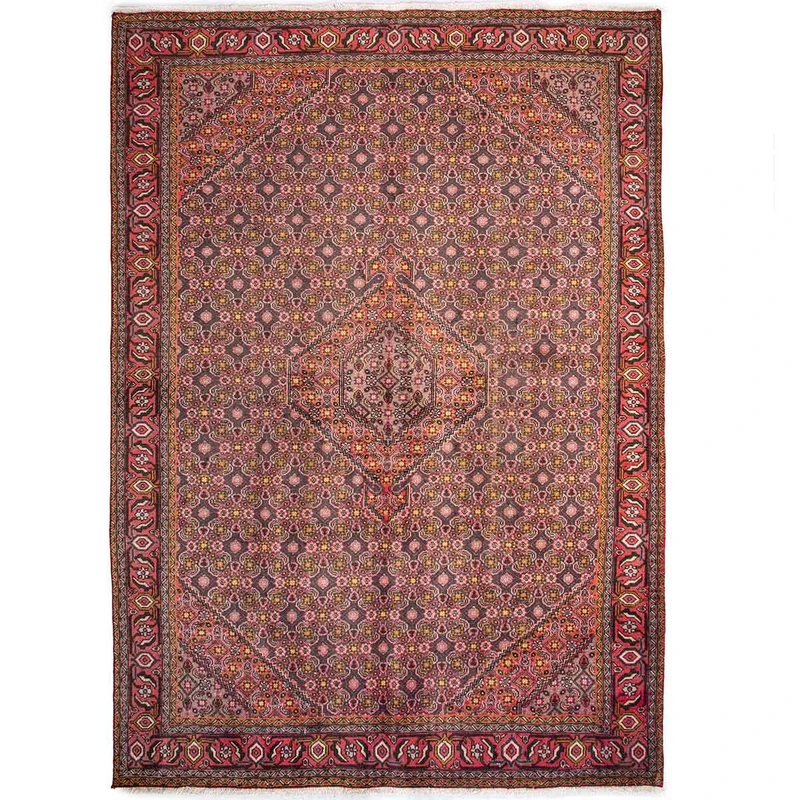
An Ardabil medallion rug in wool with silk highlights - Ardabil Persian Rug 9x6 ft - Medallion Semi Antique Wool Silk Hand Knotted
6
Meshkin - Caucasian Designs on the Slopes of Sabalan
Meshkin Shahr (Meshkin), on the northern slopes of Mount Sabalan, is known for rugs with Caucasian-inspired geometric designs: stepped medallions, hooked motifs, and stylized animals, often in long runner and gallery sizes. Meshkin rugs are sturdy and colorful, with deep reds, blues, and ivory, and they bring the bold character of Caucasian weaving into a Persian context. Explore our Meshkin collection.
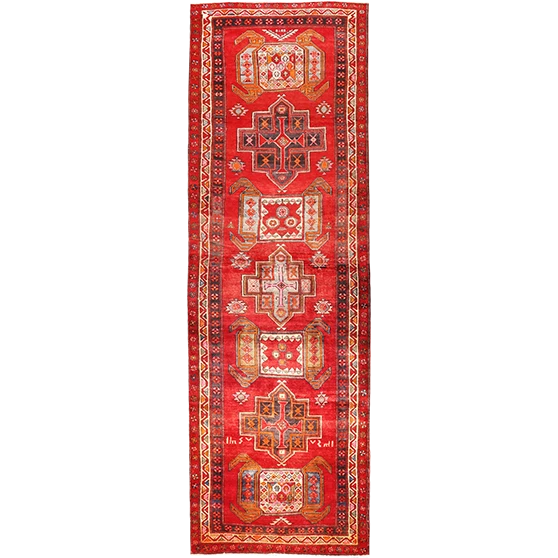
A Meshkin runner with geometric Caucasian-style designs - Meshkin Persian Rug 13x4 ft - Geometric Semi Antique Wool Hand Knotted
7
Sarab - The Camel-Colored Runners
The town of Sarab, between Tabriz and Ardabil, is famous for its long runners, traditionally with grounds of natural camel color or camel hair and a series of linked geometric medallions down the center. Sarab runners are strong, thick, and well suited to long hallways. Their warm camel tones combined with red, blue, and ivory motifs give them a distinctive, earthy elegance. See our article on weaving in Sarab and our Sarab collection.
8
Karaja - The Three-Medallion Runners
Karaja, a village near the Heriz district, is known for runners and small rugs with a very recognizable design: typically three geometric medallions in a row, often alternating in shape, on a red or blue field. Karaja rugs are usually woven with a single weft, which gives them a slightly lighter, more flexible structure than Heriz rugs. They are sturdy, colorful, and ideal for hallways and entryways. Explore our Karaja collection.

A Karaja runner with geometric medallions - Karaja Persian Rug 11x4 ft - Medallion Semi Antique Wool Hand Knotted
9
Other Weaving Centers of Azerbaijan
Many other towns and villages in the region weave rugs with their own local character:
•
Azarshahr - a town south of Tabriz producing medallion rugs in Tabriz style, often with silk highlights.
•
Zanjan - to the southeast, in an Azeri-speaking region, known for sturdy village rugs in many designs.
•
Marand, Khoy, and Urmia - towns of the north and west with village weaving traditions, some showing Kurdish and Caucasian influences.
•
Sharabian - villages near Sarab known for camel-colored and geometric rugs.
10
Azeri Culture and Crafts
Weaving in Azerbaijan is part of a rich wider culture. Azeri music, with its haunting melodies and poetic songs, accompanied life in homes and workshops, and some rug weavers sang as they worked. Our article on Tabriz rugs and the melody of a traditional Azeri song explores this connection.
The region is also known for other textile crafts, including printed and dyed fabrics, as described in our article on Persian batik from Azerbaijan, as well as kilims, bags, and other flatweaves woven by village and tribal communities. Together, these crafts reflect a culture in which pattern, color, and handwork are part of everyday life.
11
Structure and Materials
Most Azerbaijan rugs share certain structural features that help identify them:
•
The symmetrical knot - used throughout the region, in Tabriz workshops and village weaving alike.
•
Foundations - cotton warps and wefts in most town and village rugs today; older tribal and village rugs may have wool foundations.
•
Wefts - Tabriz and Heriz rugs are typically double-wefted, giving a firm, flat structure; Karaja and some other village rugs are single-wefted.
•
Wool - strong, lustrous mountain wool, especially in the Heriz district, gives Azerbaijan rugs their famous durability.
•
Knot density - from coarse, sturdy village rugs to extremely fine Tabriz workshop pieces.
12
Colors of Azerbaijan
Azerbaijan palettes vary by place and type. Heriz and Serapi rugs favor brick red, rust, deep blue, and ivory, with soft corals and camels in older pieces. Tabriz rugs range widely, from classic red and navy to soft ivory, beige, and pastel palettes. Sarab rugs are known for camel grounds, while Ardabil and Meshkin rugs often use brighter, Caucasian-style colors. Older rugs from the region frequently show beautiful natural dyes, including madder reds and indigo blues. Our series on Persian rug color, beginning with the master dyer, explains these colors.
13
How to Recognize an Azerbaijan Rug
•
Symmetrical knots and firm construction - common to most rugs of the region.
•
Bold geometric medallions - Heriz, Karaja, Meshkin, and Ardabil.
•
Fine, versatile city designs - Tabriz, often with silk highlights.
•
Camel-colored runners - Sarab and Sharabian.
•
Caucasian-style motifs - Ardabil and Meshkin.
Combined with the feel of the wool and the details of the back, these clues allow experts to place most Azerbaijan rugs quickly. Our article on how to read a Persian rug's secret language explains how.
14
Azerbaijan Rugs in Your Home
The variety of Azerbaijan rugs means there is something for every room. Heriz and Serapi carpets are ideal for living rooms, dining rooms, and family rooms, where their bold designs and durability shine; they pair beautifully with both traditional and modern furniture. Fine Tabriz rugs suit formal living rooms, studies, and bedrooms. Sarab, Karaja, and Meshkin runners are perfect for hallways and stairs, and smaller Ardabil and Karaja rugs work well in entryways and beside beds. Browse our runners and use our rug size guide to find the right size.
Because Azerbaijan rugs range from rustic village pieces to refined workshop carpets, it is easy to build a home around them, mixing a bold Heriz in the living room with a fine Tabriz in the bedroom and a colorful Karaja runner in the hall.
15
Collecting Azerbaijan Rugs
Azerbaijan rugs are among the most collected Persian rugs. Antique Serapi and Bakhshaish carpets, with their spacious designs and soft natural colors, are highly prized by designers and collectors. Fine signed Tabriz workshop rugs are sought for their craftsmanship, and older Heriz carpets in good condition have a large and loyal following. Sarab and Karaja runners offer character and durability at accessible prices.
When evaluating an Azerbaijan rug, look at the wool, the dyes, the condition of the pile and foundation, the original ends and sides, and the confidence of the drawing. Antique and semi-antique pieces in good condition offer the best long-term value. See our article on investing in hand-knotted rugs.
16
Caring for Azerbaijan Rugs
Most Azerbaijan rugs are robust and easy to live with. Heriz and Sarab rugs in particular tolerate heavy use well, though their thick structure means they should be rolled rather than folded when moved or stored. Rotate rugs once or twice a year to even out wear and sun exposure, vacuum regularly without a beater bar, and blot spills promptly with cool water. Fine Tabriz rugs with silk highlights deserve gentler handling and professional cleaning by specialists experienced with silk. Our guides to cleaning a Persian rug at home and professional rug cleaning explain the details.
17
Azerbaijan Weaving Today
Weaving remains a living tradition across Persian Azerbaijan. Tabriz continues to produce fine workshop carpets, often in classical designs, and its bazaar remains one of the great carpet markets of the country. The villages of the Heriz district still weave their famous geometric carpets, and towns such as Ardabil, Meshkin, and Sarab continue their own styles. Many weavers work at home on commission, while others work in larger workshops.
For buyers, this means a wide choice of rugs from the region, from antique Serapis and Bakhshaishes for collectors to sturdy semi-antique Heriz carpets and runners for everyday living, and fine newer Tabriz rugs for formal rooms.
18
Frequently Asked Questions
Are Heriz rugs from Tabriz?
Heriz is a separate district of villages east of Tabriz. Heriz rugs were often marketed through Tabriz merchants, but they have their own distinctive geometric style.
What is a Serapi rug?
A trade name for fine antique rugs from the Heriz district, usually from the late nineteenth century, with spacious designs and soft natural colors.
Why are Heriz rugs so durable?
Strong mountain wool, firm knotting, and a thick, heavy structure make Heriz rugs among the most durable Persian rugs.
Are Ardabil rugs related to the famous Ardabil Carpet?
Only by name and place. The Ardabil Carpet was a Safavid court masterpiece made for the shrine in Ardabil, while modern Ardabil rugs are village rugs, often with Caucasian-style geometric designs.
Are Sarab runners made with camel hair?
Many Sarab runners have camel-colored grounds; some use natural camel hair, while others use naturally colored or dyed sheep's wool.
What does raj mean in Tabriz rugs?
Raj is a traditional measure of knot density: the number of knots across about seven centimeters of width. Higher raj means a finer rug.
19
The Spirit of the Northwest
From the great bazaar of Tabriz to the mountain villages of Heriz, from the Caucasian-style rugs of Ardabil and Meshkin to the camel-colored runners of Sarab, Persian Azerbaijan offers one of the richest weaving traditions in the world. Its rugs combine durability, character, and artistry, and they have played a central role in making Persian rugs famous across the globe.
At Los Angeles Home of Rugs, you can explore our Tabriz, Heriz, Ardabil, Sarab, Karaja, and Meshkin collections. Every rug comes with a Certificate of Authenticity documenting its origin, materials, and age. If you have questions, please ask our experts.
Explore Azerbaijan Rugs
Tabriz Rugs
Heriz Rugs
Serapi Rugs
Ardabil Rugs
Sarab Rugs
Karaja Rugs
Meshkin Rugs
Runners