


Gise Gol: A Nomad Love Song and the Music of Persian Weaving
Los Angeles Home of Rugs on Nov 17th 2026
Some of the most moving stories behind Persian rugs are not written in books. They are carried in songs. Gise Gol is a folk song of the nomads who live in the central regions of Fars, in southern Persia. It is traditionally sung by a craftsman while playing the ney, the Persian end-blown reed flute, and it tells the story of a rug weaver's love for a girl named Gise Gol - a love her father would not allow.
In this article we listen closely to this song and to the world it comes from: the nomadic tribes of Fars, their seasonal migrations, their music, and their weaving. Along the way, we will see how songs and rugs grow from the same roots, and why a tribal rug from Fars can feel like a piece of music woven in wool.
1
The Story of Gise Gol
The story at the heart of the song is simple and timeless. A young craftsman, a rug weaver, falls in love with a girl named Gise Gol. He wants to marry her, but her father refuses to give his consent. Unable to change the father's mind, the weaver pours his feelings into song. He sings his heart out, expressing his longing, his hope, and his sorrow, while the voice of the ney weaves around his words.
Stories like this one were told and retold around nomad campfires and in village homes for generations. They speak of love that crosses boundaries, of families and their expectations, and of the way art can give voice to feelings that cannot be spoken openly. In Persian, *gol* means "flower," a word that appears again and again in the names of rug motifs and in the poetry of everyday speech. A girl named after a flower, sung about by a weaver who spends his days tying knots of colored wool into flowers - it is hard to imagine a more fitting subject for a weaver's song.
2
The Ney: The Voice of the Reed
The ney is one of the oldest instruments of Persia. It is an end-blown flute made from a length of reed, with finger holes along its body. The player holds it at an angle and blows across the top edge, producing a breathy, haunting tone that can be gentle and intimate or wild and piercing.
In Persian culture, the ney carries deep meaning. The great poet Rumi opens his famous *Masnavi* with the song of the reed, which laments being cut from its reed bed and longs to return. For many listeners, the sound of the ney expresses longing and separation - exactly the feelings at the center of the Gise Gol story. Among nomads, simpler shepherd's flutes have long accompanied life in the mountains, played while watching the flocks or resting at the end of the day.
The ney, the Persian reed flute, has a breathy, haunting voice that many listeners hear as an expression of longing - the perfect companion for a song about love that cannot be fulfilled.
3
The Nomads of Fars
The province of Fars, in southern Persia, is home to some of the most famous nomadic peoples of the country. The best known are the Qashqai, a Turkic-speaking confederation of tribes, and the Khamseh, a confederation of five tribes of Arab, Persian, and Turkic origin. Luri-speaking tribes and other groups also live in the region. For centuries, these peoples have lived by herding sheep and goats, moving their flocks between summer and winter pastures. Our articles on the Qashqai tribes and the Qashqai and Bakhtiari tribes tell their stories in more detail.
The central regions of Fars, where Gise Gol was sung, form a landscape of high mountains, valleys, and plains. In spring, the tribes travel north to cool mountain pastures; in autumn, they return south to the warmer lowlands. This seasonal migration, called *kuch* in Persian, has shaped every aspect of nomadic life, from the design of tents to the size of rugs.
4
Life on the Move
A nomad family's home is its tent, woven from black goat hair that keeps out rain and wind. Everything the family owns must be carried on the backs of animals, so possessions are few, practical, and beautiful. Woven bags, saddlebags, salt bags, and bedding bags hold the family's belongings; rugs and kilims cover the floor of the tent; and woven bands decorate animals and tent poles.
During the migration, families travel for days or weeks, setting up camp each night. Women often weave on horizontal ground looms that can be rolled up and carried, then staked out again at the next camp. This mobility explains why many nomad rugs are small or medium in size and why their designs are woven from memory rather than from paper cartoons.
5
Music in Nomad Life
Music runs through nomad life from birth to death. Mothers sing lullabies to their babies in the tent. Shepherds play flutes on the mountainsides. Women sing as they work - churning butter, spinning wool, and weaving. And at weddings and celebrations, the whole community joins in.
Nomad weddings in Fars are famous for their music and dance. The sorna, a loud double-reed instrument, and the dohol, a large double-headed drum, fill the air with energetic rhythms. Men perform the stick dance, *chub bazi*, in which pairs of dancers spar with long sticks in time to the music, while women in colorful layered skirts dance with handkerchiefs in graceful circles. Songs of love, migration, heroism, and longing are sung late into the night.
Love songs like Gise Gol belong to this rich musical world. They are often sung in a free, flowing rhythm, with long held notes and ornamented melodies that echo the sound of the ney. Our articles on the romantic relationship between Persian rugs and traditional music and Persian rug music explore these connections further.
6
Instruments of the Fars Nomads
Besides the ney, the nomads of Fars play several other instruments. The kamancheh, a bowed fiddle held upright on the knee, has a warm, singing voice that suits love songs and laments. Shepherds play simple end-blown flutes made from reed or wood, sometimes carved by the players themselves. At celebrations, the powerful sorna and the deep beat of the dohol take over, and frame drums keep time for dancing. Each instrument has its place: quiet flutes for solitude and longing, fiddles for storytelling, and loud reeds and drums for joy and gathering.
Many nomad musicians learned by ear, from fathers, uncles, and older players in the tribe, just as weavers learned from their mothers. No written music was needed. Melodies, like patterns, lived in memory and changed a little with each performer.
7
Songs at the Loom
Weaving is slow, repetitive work, and song has always made it lighter. Nomad women often sing as they weave, keeping a rhythm as they tie knots and beat down the wefts. Songs pass the hours, teach younger weavers, and carry the stories of the family and the tribe.
In the city workshops of Persia, a different kind of song developed. In some workshops, a reader would chant the pattern aloud, calling out the colors and numbers of knots in a sing-song voice while the weavers followed. This practice turned the design itself into a kind of music, with rhythm and repetition guiding the hands of the weavers.
Nomad weavers, who work from memory, carry their designs in a different way. A pattern repeated over a lifetime becomes part of the weaver's body, like a familiar melody. Many weavers say they can "feel" when a motif is right, just as a musician feels when a phrase is in tune. Our article on the timeless beauty of Tabriz rugs and an Azeri melody explores a similar connection in northwest Persia.
8
The Weaver's Tools
The tools of a nomad weaver are few and simple, which makes them easy to carry on the migration. A horizontal ground loom consists of two wooden beams held apart by stakes driven into the earth. The weaver uses a knife to cut the yarn after each knot, a heavy metal or wooden comb to beat down the wefts, and a pair of shears to trim the pile. Wool is spun by hand on a drop spindle, often while walking beside the flocks. Our articles on spinning wool and how a Persian rug is made explain these steps in more detail.
9
Rugs of the Fars Nomads
The nomads of Fars weave some of the most beloved tribal rugs in the world. Our article on Fars rugs describes them in detail, but here is a brief overview:
•
Qashqai rugs - finely woven tribal rugs with bold medallions, stylized animals, and rich reds and blues. Qashqai weavers are among the most skilled tribal weavers of Persia. See our Qashqai collection and our article on Qashqai weaving.
•
Khamseh rugs - often featuring rows of stylized birds and diamond medallions in warm, deep colors. See our Khamseh rugs.
•
Luri rugs - bold, geometric rugs with strong colors and simple, powerful designs. See our Lori rugs.
•
Gabbeh - thick, loosely knotted rugs with simple designs and large areas of open color, woven for use in the tent. See our Gabbeh rugs and our article on Gabbeh rugs.
•
Kilims - flat-woven rugs with bold geometric designs, used as floor covers, blankets, and wrappings. See our kilims and our article on Persian kilims.
Many rugs from this region are sold under the market name Shiraz, after the capital of Fars, where tribal rugs have long been traded. Explore our Shiraz collection.
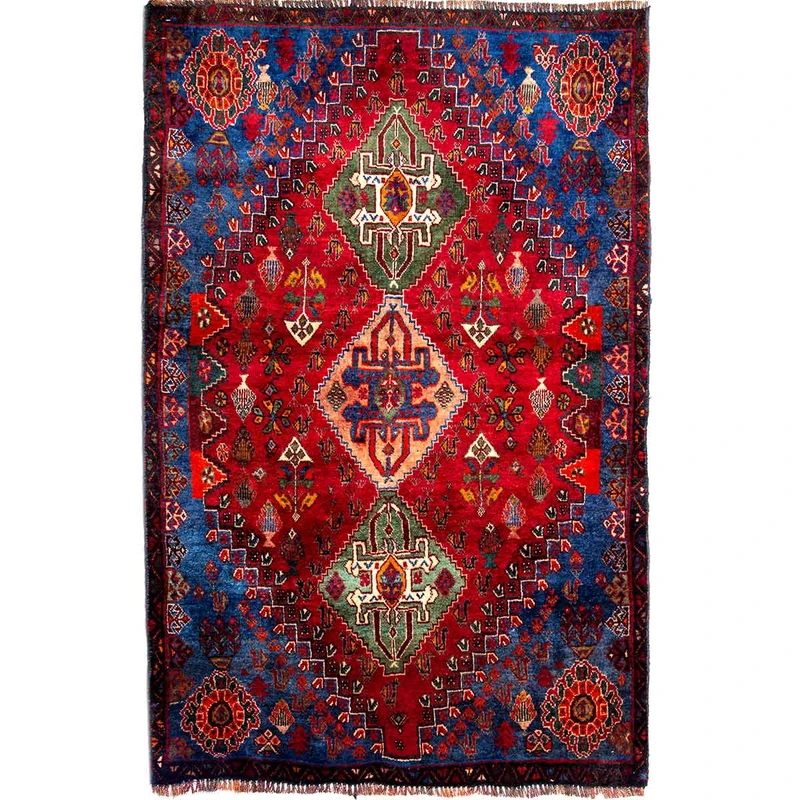
A Qashqai rug with geometric tribal motifs - Qashqai Persian Rug 4x3 ft - Geometric Semi Antique Wool Hand Knotted
10
How Songs Become Patterns
There is a deep kinship between nomad songs and nomad rugs. Both are made from memory, passed down from mother to daughter and from master to student. Both use repetition and variation: a song repeats a verse with small changes, just as a rug repeats a motif with changes in color and size. And both express the life of the people who make them - their landscape, their animals, their loves, and their losses.
Look closely at a tribal rug from Fars and you may see the world of the Gise Gol song. Small flowers are scattered across the field. Birds, goats, dogs, and horses appear between the medallions. A tiny human figure, perhaps a portrait of a loved one, stands in a corner. A weaver might add a motif to mark a wedding, a birth, or a memory. These personal touches are like verses of a song, woven into wool for anyone who knows how to read them. Our article on how to read a Persian rug's secret language explains many of these symbols.
11
The Flower in Persian Rugs
The word *gol*, flower, is everywhere in the language of Persian rugs. Weavers speak of the *gol-e farang* (the "European flower," a rose motif), the *gol-e Hennai* (the henna flower), and countless other floral motifs, and the general word for a motif or medallion in many regions is simply *gol*. Flowers appear in every kind of rug, from the naturalistic gardens of city carpets to the bold, geometric blossoms of tribal weavings.
For nomads, flowers are a sign of spring and of the green mountain pastures that the tribes reach after the long spring migration. A field of small flowers on a tribal rug is a memory of these meadows, carried into the tent through the long winter. Our guide to Persian rug motifs explains many floral and geometric motifs, and our article on Persian garden rugs explores the deeper meaning of the garden in Persian art.
12
Colors of the Fars Nomads
The tribal rugs of Fars are famous for their rich, glowing colors, made from local plants and minerals. Deep madder reds, indigo blues, warm golds and oranges, ivory, and touches of green are typical. The colors often vary within a single rug, a feature called *abrash*, because wool was dyed in small batches as needed. This natural variation gives nomad rugs a living, shimmering quality, like the changing tones of a voice in song. Our articles on natural dyes and the principal natural dyes of Persian rugs explain how these colors are made.
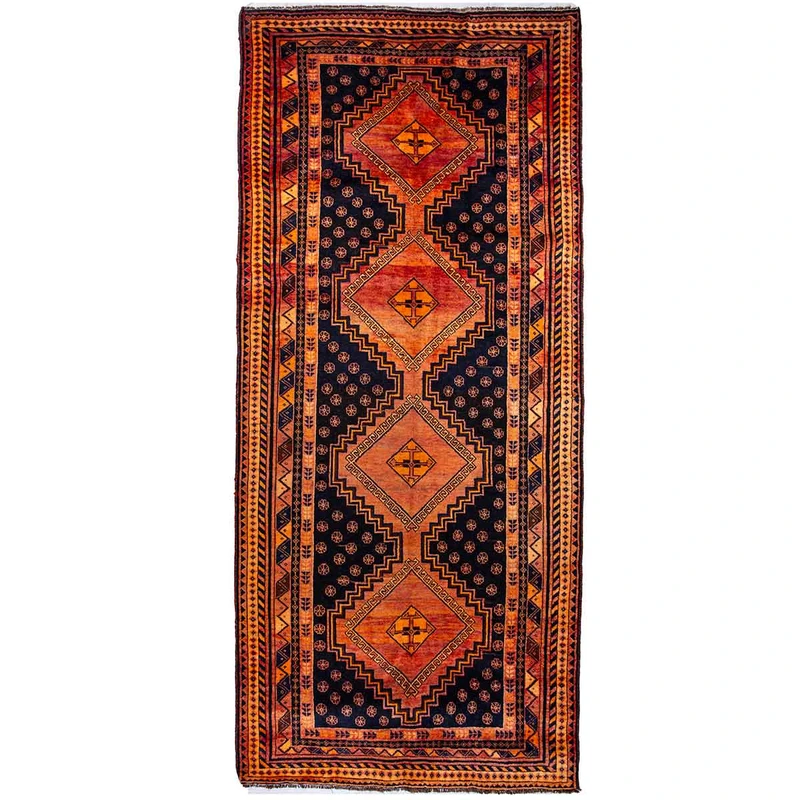
An antique Shiraz rug from the tribal weavings of Fars - Shiraz Persian Rug 12x5 ft - Geometric Antique Wool Hand Knotted
13
Love, Marriage, and Weaving
In nomad society, weaving and marriage have long been connected. Young women traditionally wove pieces for their dowries: rugs, bags, and bedding covers that would furnish their new homes. A girl's weaving was a sign of her skill and her family's pride, and the textiles she brought to her marriage were treasured for life.
This tradition adds a poignant layer to the Gise Gol story. A weaver who loves a girl would understand the value of her work and her family's expectations. The father's refusal touches a world in which marriages were family decisions, and in which love often found its truest expression in art - in songs sung to the ney, and in rugs woven with care for a future home.
14
Other Folk Songs and Music of Persia
Gise Gol is one of many folk songs that express the life of Persia's rural and nomadic peoples. Each region has its own instruments, rhythms, and stories. Our blog includes articles on the folk music of Lorestan, Mazandaran, and Khorasan, as well as the spectacular 1,000-daf performance in Sanandaj. Listening to these traditions is a wonderful way to understand the cultures that weave Persian rugs.
15
Nomadic Weaving Today
Life for the nomads of Fars has changed greatly over the past century. Many families have settled in villages and towns, while others continue to migrate, sometimes using trucks instead of animals to move their flocks and belongings. Weaving continues, but it now takes place both in tents and in village homes, and new designs and colors have entered the tradition.
Yet the old songs and the old patterns endure. Weavers still tie knots from memory, still decorate their rugs with flowers and animals, and still sing as they work. Collectors around the world prize tribal rugs from Fars for their honesty, beauty, and connection to a way of life that has lasted for centuries. Explore our nomadic rugs and tribal and nomadic designs to see this tradition today.
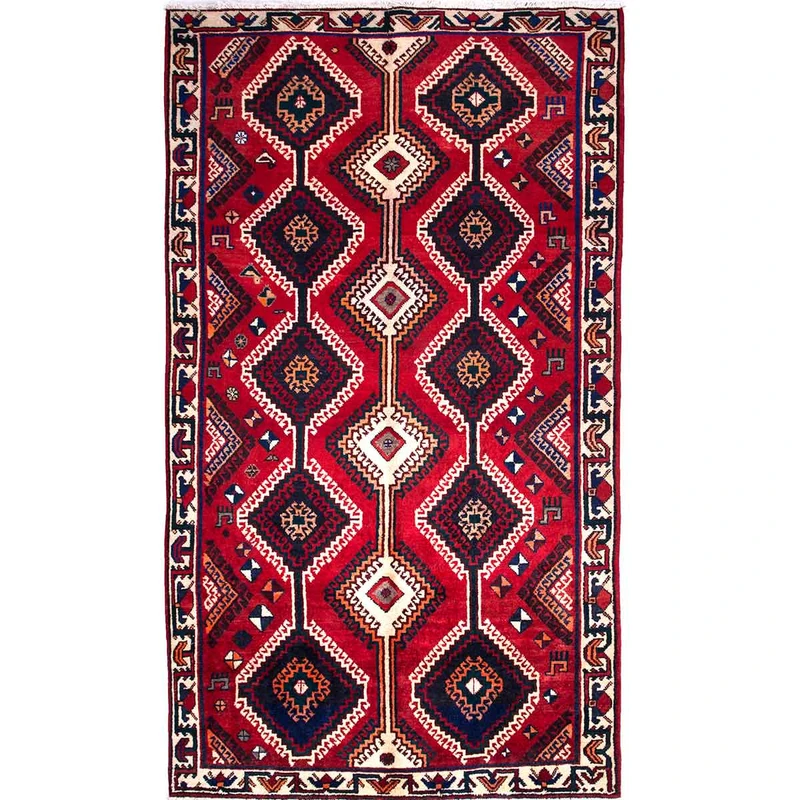
A Lori rug with bold geometric designs - Lori Persian Rug 9x5 ft - Geometric Semi Antique Wool Hand Knotted
16
Bringing a Nomad Rug Into Your Home
A tribal rug from Fars brings warmth, color, and a sense of story to any room. Here are a few ideas:
•
Living rooms - a Qashqai or Shiraz rug adds rich color and character in front of a sofa or by a fireplace.
•
Bedrooms - a small tribal rug beside the bed is warm underfoot and full of personality.
•
Entrance halls - a durable nomad rug welcomes guests and stands up well to foot traffic.
•
Studies and reading corners - a tribal rug with animals and flowers invites closer looking.
•
Modern interiors - the bold geometric designs of tribal rugs work beautifully with clean, contemporary furniture.
Our rug size guide will help you choose the right size, and our buyer's guide explains how to evaluate any Persian rug.
17
Caring for a Tribal Rug
Tribal rugs are made of strong wool and are easy to care for. Vacuum regularly without a beater bar, rotate the rug every year or so, and blot spills promptly with cold water. Use a rug pad to keep the rug from slipping. Have it professionally washed every few years. Our guides to cleaning a Persian rug at home and professional rug cleaning explain these steps.
18
Frequently Asked Questions
What is Gise Gol?
A folk song of the nomads of central Fars, sung while playing the ney, about a rug weaver's love for a girl named Gise Gol whose father would not allow them to marry.
What is a ney?
A Persian end-blown reed flute with a breathy, haunting tone, one of the oldest instruments of Persia.
Who are the nomads of Fars?
Mainly the Qashqai and Khamseh confederations, along with Luri-speaking tribes and other groups, who traditionally migrate between summer and winter pastures.
How are music and weaving connected?
Both are made from memory and passed down through families, and weavers often sing as they work. Songs and rugs express the same stories, landscapes, and feelings.
What kinds of rugs do the Fars nomads weave?
Qashqai, Khamseh, and Luri pile rugs, Gabbeh rugs, kilims, and many kinds of bags and smaller weavings, often sold under the name Shiraz.
Is Gise Gol still performed today?
Yes. Folk songs like Gise Gol are still sung and played by musicians in Fars and are kept alive by recordings, festivals, and family gatherings, where older singers pass them on to younger generations.
Where can I listen to Gise Gol?
You can watch a performance in the video at the end of this article.
19
A Song Woven in Wool
The story of Gise Gol reminds us that every rug has a human story behind it. The weaver who sang of his love, the girl whose name means a flower, the father who said no, and the haunting voice of the ney - all of these belong to the same world that produces the tribal rugs of Fars. When you look at a nomad rug, with its scattered flowers, its animals, and its glowing colors, you are looking at a song made visible.
At Los Angeles Home of Rugs, you can explore our Qashqai, Shiraz, Khamseh, and Lori collections, along with our nomadic rugs. Enjoy the video below to hear Gise Gol performed on the ney, and if you have questions about any rug, please contact us.